Bee Christmas
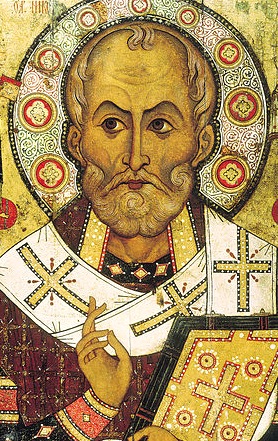
Saturday, December 19th, 2015Honey is a symbol of grace – a gift freely given by honey bees – and saints were known as ‘Divine Bees’ because they often led lives that expressed grace and love. Saint Nicholas was born about 280 AD into a rich family, but when his parents died he used his great wealth to help the poor and sick, giving them gifts in secret. He became a bishop and because of his beliefs he was imprisoned by the Roman Emperor, Diocletian. Today Nicholas is the Patron Saint of Greece and possibly the model for the gift-giving Santa Claus. Honey is given as a gift to children on St. Nicholas’ Day.
A painting of St. Nicholas (1294):
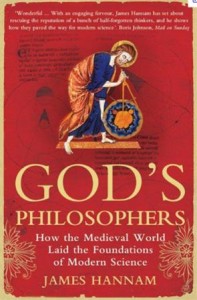 It’s a myth (turned cliche) that science and faith have always been at odds. The book, God’s Philosophers: How the Medieval World Laid the Foundations of Modern Science by James Hannam, shows how the church supported the genesis of science. Medieval universities were church-sponsored and ‘natural philosophy’ (as science was called back then) was a core subject. European thinkers drew on ancient Greek and Islamic texts to develop scientific principles that we still use today. Hannam debunks the myth of the ‘Dark Ages’: for example, people knew the Earth was round; the Christian church did not routinely persecute scientists; there were many inventions, from clocks to spectacles; and early Islamic scientists discovered how the eye functions and invented surgical instruments. (