Archive for the ‘Writing’ Category
Friday, November 4th, 2022
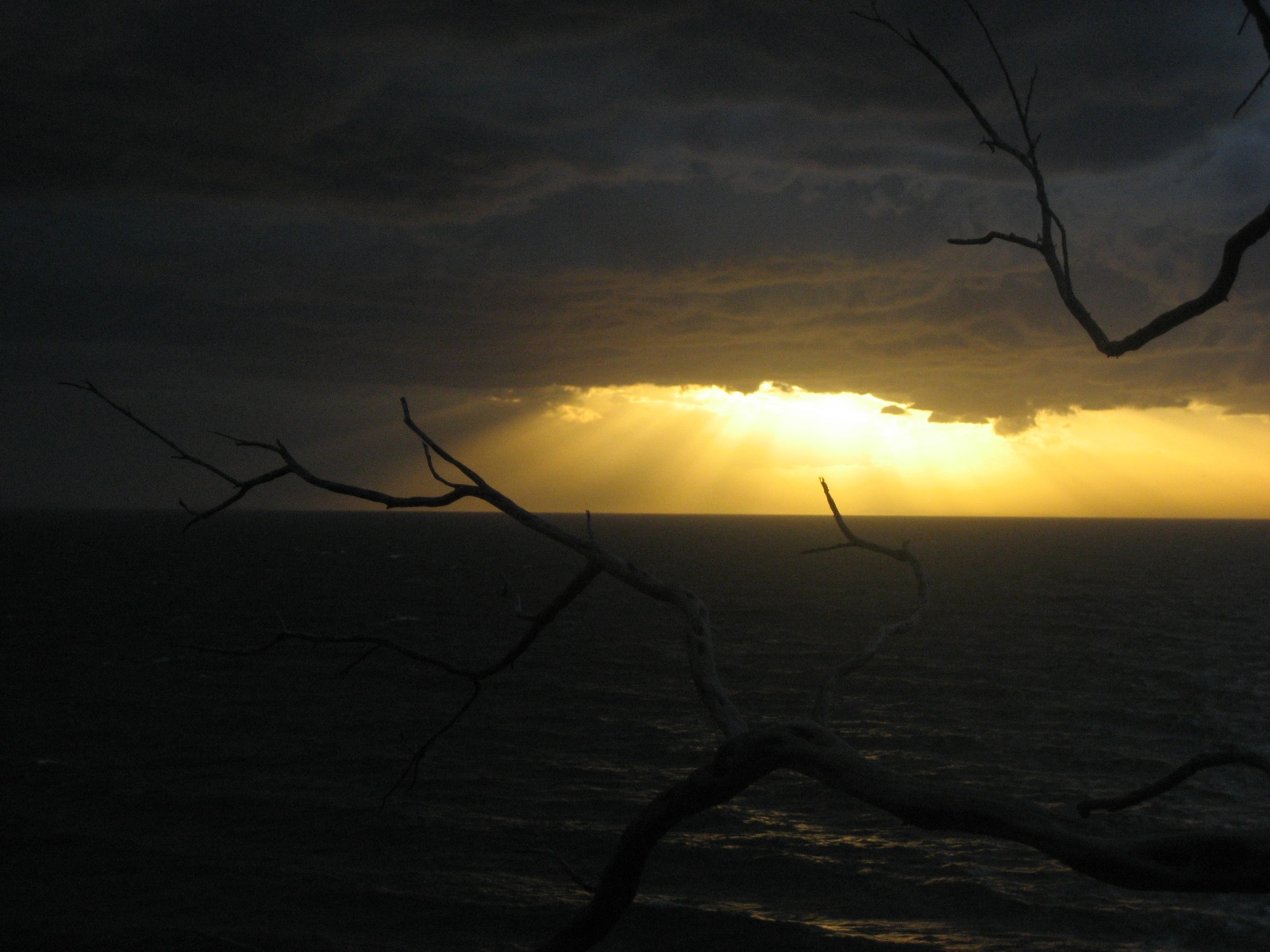
Never open a book with weather.– Elmore Leonard (10 Rules For Writing)
The best opening sentences in novels grab the reader immediately – they introduce character, setting and problem; fire the imagination; and the action is clear:
Give your readers as much information as possible as soon as possible. Readers should have such complete understanding of what is going on … that they could finish the story themselves, should cockroaches eat the last few pages.– Kurt Vonnegut
(Vonnegut’s Breakfast of Champions begins, “This is a tale of a meeting of two lonesome, skinny, fairly old white men on a planet which was dying fast.”)
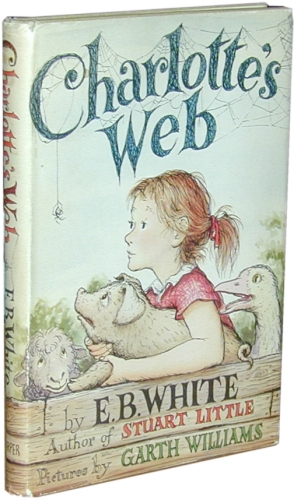
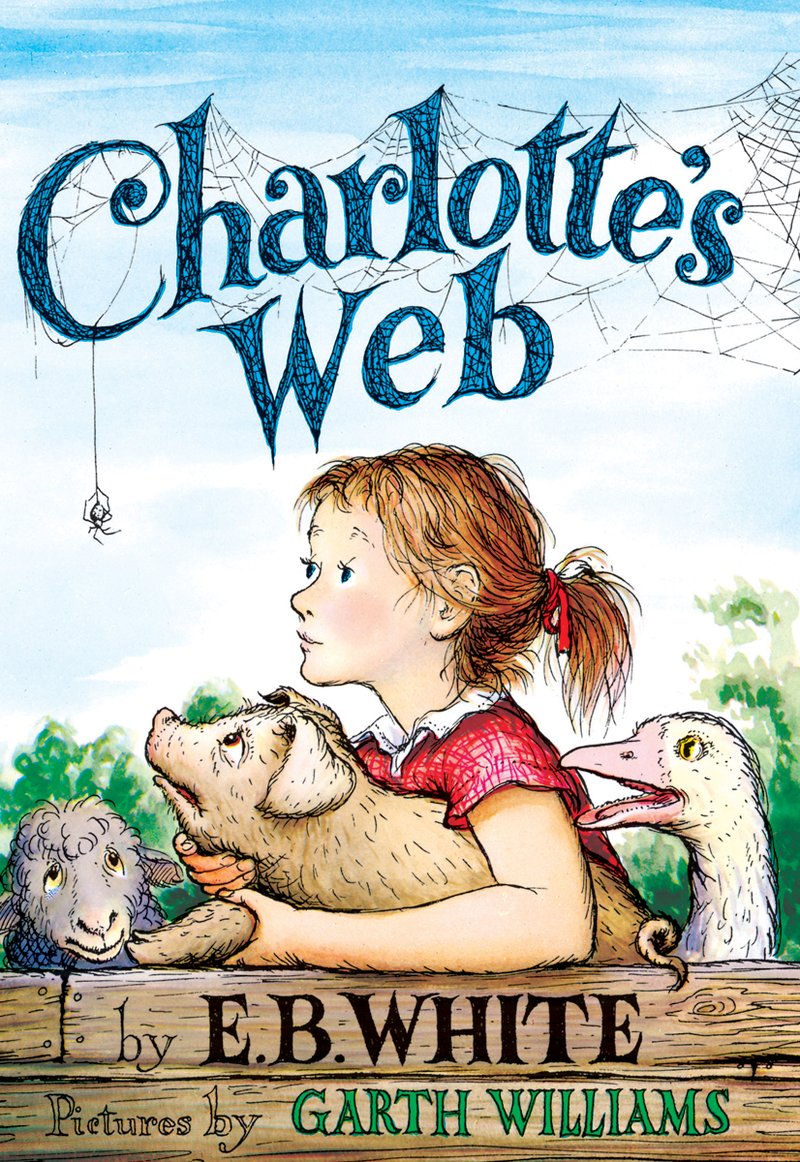
My favourite opening is from Charlotte’s Web by E. B. White, deftly introducing people, place, and problem in one sentence:
“Where’s Papa going with that axe?’ said Fern to her mother as they were setting the table for breakfast.
Test Yourself
Match these classic openings from children’s novels to the titles below.
1. All children, except one, grow up.
2. There was a boy called Eustace Clarence Scrubb, and he almost deserved it.
3.The Iron Man came to the top of the cliff.
4. Here I am, Ralph William Mountfield, banished to my bedroom on Christmas Day.
5. Keith the boy in the rumpled shorts and shirt, did not know he was being watched as he entered Room 215 of the Mountain View Inn.
6. My father is put in the stocks again! Oh! the injustice of it!
7. When Old Tip lost his bark, Uncle Trev had to teach his horse to bark and chase the cows up to the shed for milking.
8. It’s a funny thing about mothers and fathers. Even when their own child is the most disgusting little blister you could ever imagine, they still think that he or she is wonderful.
9. I write this sitting in the kitchen sink.
Titles in random order: The Iron Man, I Capture The Castle, The Voyage of the Dawn Treader, The Mouse and the Motorcycle, Devil-in-the-Fog, Matilda, The More the Merrier, Uncle Trev, Peter Pan
More: Advice for writing an effective opening (Jacob Appel).
Tags: children's books, E B White, writing
Posted in Children's Books, Writing | 2 Comments »
Sunday, August 7th, 2022
Anyone can write but editing must be learned. Some books that helped me learn to edit:
Self Editing For Fiction Writers by Renni Browne and Dave King teaches style, dialogue, point of view, ‘show not tell’, character.
The Art of Writing by John Gardner talks about maintaining the ‘dream’ of the story – when the writing draws attention to itself (in a bad way) then the dream is broken for the reader.
Go over and over it…refusing to let anything stay if it looks awkward, phony, or forced.– John Gardner
On Becoming a Writer by Dorothea Brande (1934) suggests a writer begins with the unconscious mind ‘but then the conscious mind ‘must control, combine and discriminate’. That’s editing in a nutshell.
The writer must be as God in his universe — present everywhere and visible nowhere. -Flaubert
Tags: books, editing, writing
Posted in Book Reviews, Writing | Comments Off on Self Editing – 3 Books
Saturday, June 4th, 2022
Miss Clavel turned on the light and said, “Something is not right!” – Madeleine
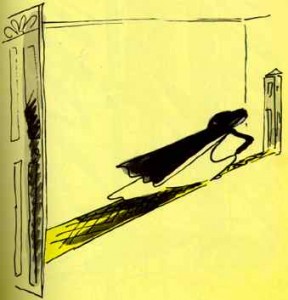
You’ve written a wonderful story and can’t wait to publish it. But wait! Hide your story away for weeks, even months. When you read it again it will be like turning on the light and you’ll see what’s not right – you’ll see with fresh eyes. I’m often too hasty as a writer, but after a pause, I get that Miss Clavel feeling when a scene doesn’t fit or a character speaks in clichés – when the ‘story dream’ is broken.
Illustration from the timeless book, Madeleine, by Ludwig Bemelmans.
Nothing must be out of place. The reader must keep turning pages with no interruptions in the flow. – Darcy Pattison
Go over and over it…refusing to let anything stay if it looks awkward, phony, or forced.– John Gardner
Tags: picture books, writing
Posted in Writing | Comments Off on Miss Clavel’s Writing Advice
Tuesday, May 3rd, 2022
A book needs us desperately. We have to pull it off the shelf. We have to open it up. We have to turn the pages, one by one. We even have to use our imagination to make it work. So, suddenly, that book is not just a book; it’s our book. – Mo Willems
The pictures are not very defined because one wants to be able to have the imagination playing over them. – Quentin Blake
Because they have so little, children must rely on imagination rather than experience. – Eleanor Roosevelt
“I could be bounded in a nutshell, and count myself a king of infinite space…”— Shakespeare (Hamlet)
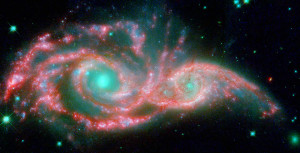
Image: Two merging galaxies, from NASA’s Spitzer and Hubble Space Telescopes. (Credit: NASA, ESA/JPL-Caltech/STScI/D. Elmegreen (Vassar)
Tags: children's books, writing
Posted in Children's Books, Writing | Comments Off on Imagination
Saturday, January 8th, 2022
Tell all the truth but tell it slant – Emily Dickinson
Science can be difficult to describe: all the maths, jargon, and slippery quantum physics. That’s why analogies and metaphors are so useful in science. And so comforting:
We find it easier to reason by comparing unfamiliar with familiar, falling back on experience, looking for links between things, and seeking out pattern and meaning. – Joel Levy, A Bee in a Cathedral
Science abounds in comparisons: a greenhouse to explain global warming; a cat in a box to illustrate a paradox; and Kepler’s clockwork solar system. One of my favourites compares quantum physics to jazz and general relativety to a waltz:
General relativity is like Strauss — deep, dignified and graceful. Quantum theory, like jazz, is disconnected, syncopated, and dazzlingly modern. – Margaret Wertheim, Physics’s Pangolin
Photo: Shrödinger’s Cat in a super position
Tags: science
Posted in Science, Writing | Comments Off on Science Metaphors
Saturday, July 10th, 2021
A great final sentence can offer hope, provoke a smile or trigger a shiver. At its best, it encapsulates the whole literary work. Where are these great last lines from?
“It is not often that someone comes along who is a true friend and a good writer – Charlotte was both.“ (children’s novel)
“Overhead, without any fuss, the stars were going out.” (short story)
“He found his supper waiting for him – and it was still hot.” (picture book)
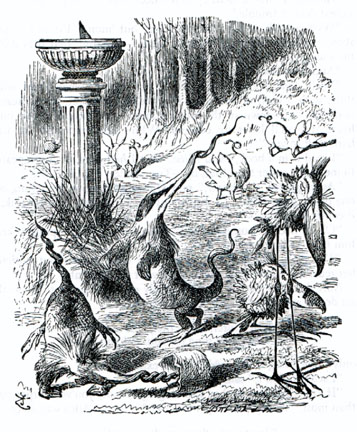
“All mimsy were the borogroves, and the mome raths outgrabe.” (poem)
“From so simple a beginning endless forms most beautiful and most wonderful have been, and are being evolved.” (non-fiction)
“It is a far, far better thing that I do, than I have ever done; it is a far, far better rest that I go to than I have ever known.” (adult novel)
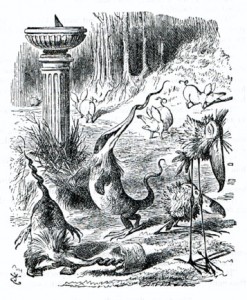 Picture: Tenniel’s borogroves (Victorian Web).
Tags: writers, writing
Posted in Writing | Comments Off on 5 Perfect Endings
Saturday, April 10th, 2021
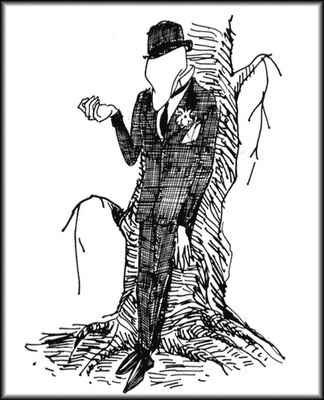
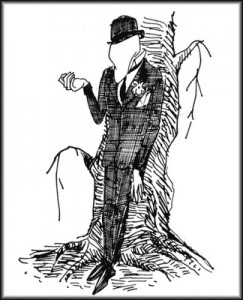 More than any book I read as a child, The Phantom Tollbooth by Norton Juster (who died recently), gave me a love of words – it puns them, pushes them, and plunders their meaning. It’s overflowing with inventiveness: the man who is short, tall, thin and fat, at the same time; an orchestra that plays colours; a city that disappears because nobody cares. And I love the illustrations by Jules Feiffer, such as the faceless timewaster, The Trivium, who has this message for writers:
What could be more important than doing unimportant things? … There’s always something to do to keep you from what you really should be doing.
The story is about a child’s quest to overcome boredom. It’s told with imagination, wit, and wisdom — what more could you want in a children’s book?
I had been an odd child: quiet, introverted and moody. Little was expected from me. Everyone left me alone to wander around inside my own head. When I grew up I still felt like that puzzled kid — my thoughts focused on him, and I began writing about his childhood. – Norton Juster
Tags: children's books, humour, writers, writing
Posted in Children's Books, Writing | Comments Off on The Phantom Tollbooth – Love Of Words
Thursday, March 11th, 2021
Fiction should be both canny and uncanny. – Flannery O’Connor
One of my favourite short stories is Flannery O’Connor’s A Good Man Is Hard To Find – it certainly has a powerful ending. Her stories can be dark but there’s always a redemptive thread in them. O’Connor wrote despite the pain of lupus which ended her life at the age of 39. Here are some of her thoughts about the writing process (from Mystery and Manners):
If you want to write well and live well at the same time, you’d better arrange to inherit money.
When I sit down to write, a monstrous reader looms up who sits down beside me and continually mutters, ‘I don’t get it, I don’t see it, I don’t want it.’
Fiction is about everything human and we are made of dust, and if you scorn getting dusty, then you shouldn’t write fiction.
There’s a certain grain of stupidity that the fiction writer can hardly do without and this is the quality of having to stare, of not getting to the point at once.
The artist uses her reason to discover an answering reason in everything she sees.
The writer has to judge himself with a stranger’s eye and a stranger’s severity.
Tags: books, reviews, writers
Posted in Book Reviews, Writing | Comments Off on Flannery O’Connor On Writing
Wednesday, October 28th, 2020
Writing requires four fundamental steps:
Imagine: ‘Open your mind’ (P.D. James)
Write: ‘Put one word after another’ (Neil Gaiman)
Edit: ‘Omit needless words’ (William Strunk)
Hope: ‘Outrun the self-doubt’ (Stephen King)
The steps of writing harmonise with the four fundamental forces of the physical world:
Electromagnetism: has infinite range, like imagination,
Weak Force: is confined to the atoms, as a writer must be confined to work.
Strong Force: holds nuclei together, as editing strengthens writing.
Gravity: keeps us anchored and has infinite range, like hope.
Read my essay, The Science of Writing.
Tags: books, connections, science, writing
Posted in Science, Universe, Writing | Comments Off on The Forces of Writing
Monday, September 3rd, 2018
Stories tend to get out of hand– Tolkien
Reading Humphrey Carpenter’s wonderful J.R.R. Tolkien – A Biography. The story of his early life and evolution of his stories is fascinating. Some quirky influences on Tolkien’s writing:
- The toddler Tolkien attacked by a terrifying tarantula in South Africa (1895)
- Tolkien’s teacher trained his dog to lick its lips with the command “smakka bagms”
- His fellowship of young writers which is broken by the Great War
- The inspiration of the Kalevala mythology of Finland
- A ‘nasty’ holiday on which he wrote a poem about a slimy cave creature named ‘Glip’
- His friendship with C.S.Lewis, on whom he based Treebeard’s ‘hrooming’ voice
Link to all the Lord of the Rings covers.
Tags: tolkien
Posted in Book Reviews, Children's Books, Writing | Comments Off on Tolkien’s Writing
Saturday, June 9th, 2018
That touch of reality in a child’s life is a child’s comfort. The child gets the sense that this person who wrote this book knows about me and knows the world can be a troubling, incomprehensible place. Maurice Sendak
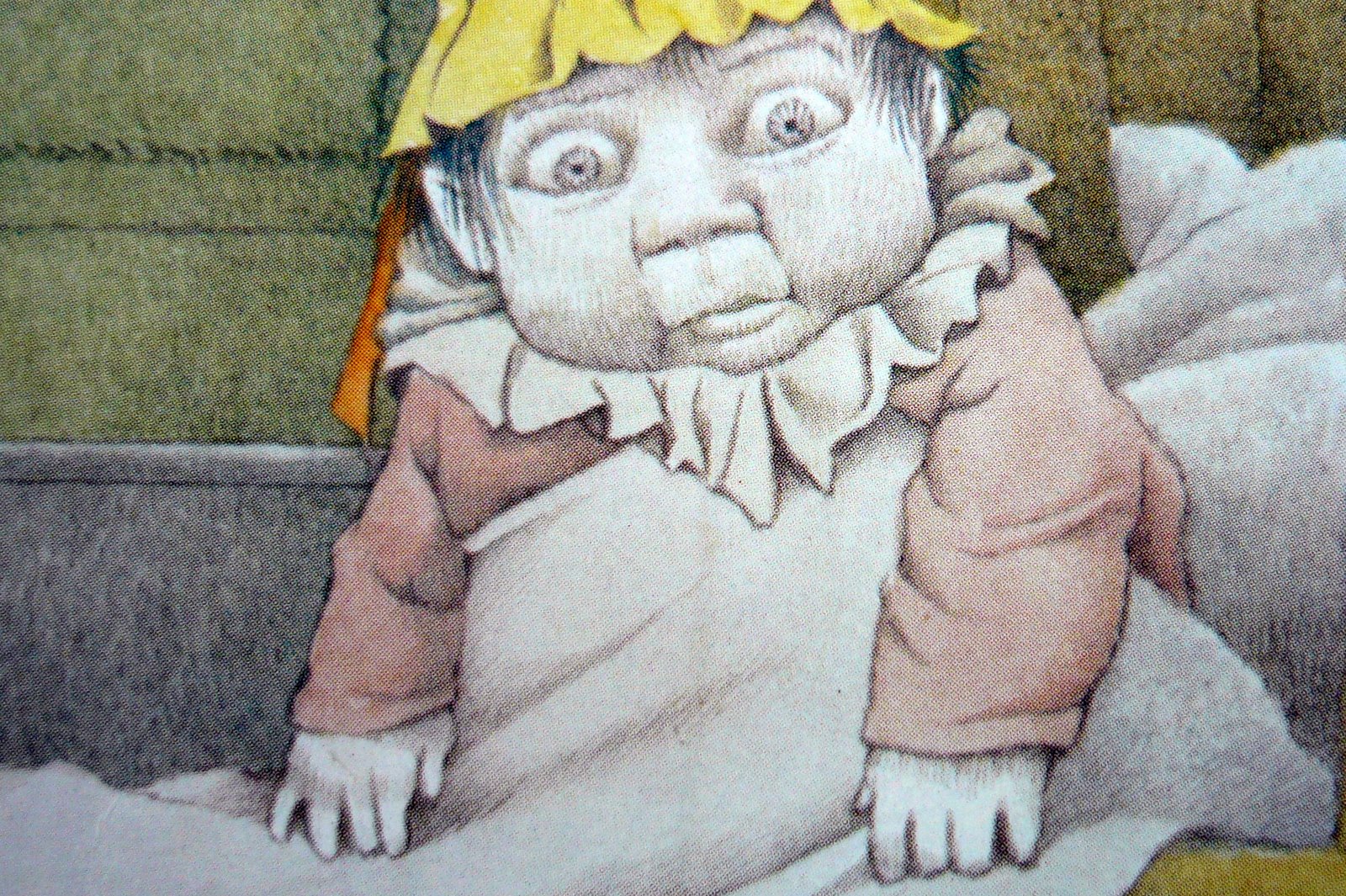
Outside Over There is my favourite Maurice Sendak picture book – – nobody else combined the real and the unreal so well. It’s a tale of separation and siblings (that features a creepy ice baby) and is both haunting and comforting. 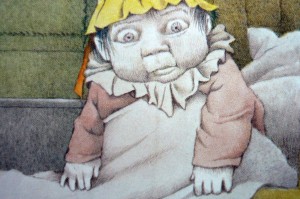
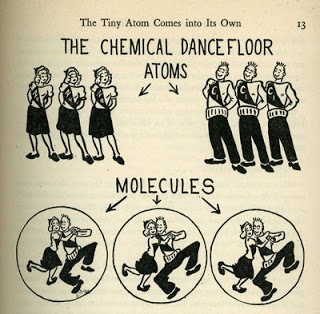
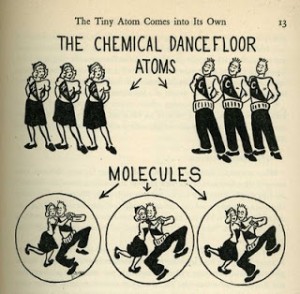
Sendak’s books can be exuberant (In the Night Kitchen), spiritual (Dear Mili), and funny (Pierre, a cautionary tale). I like his vision of atoms dancing to form molecules from the first book he illustrated (when 19 years old), Atomics for the Millions:
Tags: books, children's books, picture books, reviews
Posted in Book Reviews, Children's Books, Writing | 1 Comment »
Saturday, March 3rd, 2018
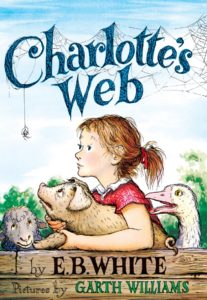
E.B. White wrote only three children’s books and two are America’s top books (Charlotte’s Web and Stuart Little). What was his secret? Imagination, yes, but he also took his time and revised a lot to refine his style. Charlotte’s Web is a short book but it took two years to write the first draft, then another year to rewrite it. It has the best opening line of any children’s book – “Where’s Papa going with that axe?”; and perhaps the finest ending (certainly the most heart-rending).
The ending is as beautiful, bold and full of integrity as Charlotte herself.– Guardian
In a Paris Review interview, White puts a witty spin on procrastination (which writers are good at):
Delay is natural to a writer. He is like a surfer—he bides his time, waits for the perfect wave on which to ride in. He waits for the surge (of emotion? of strength? of courage?) that will carry him along. I am apt to let something simmer for a while in my mind before trying to put it into words. I walk around, straightening pictures on the wall, rugs on the floor—as though not until everything in the world was lined up and perfectly true could anybody reasonably expect me to set a word down on paper.

Tags: children's books, E B White, writers, writing
Posted in Children's Books, Writing | Comments Off on How to Write like E. B. White
Sunday, February 5th, 2017
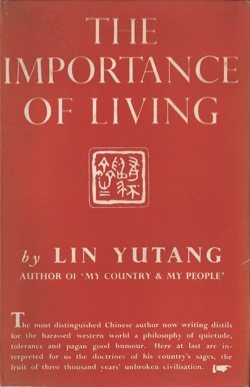
Thoughts from The Importance of Living (1938) by Lin Yutang, Chinese philosopher and inventor.
On writers:
Every word has a life and a personality. A writer always has an instinctive interest in words.
Writing is but the expression of one’s own nature or character… style is not a method, a system or even a decoration; it is but the total impression that the reader gets of the quality of the writer’s mind.
A writer in the ‘familiar’ style speaks in an unbuttoned mood. He completely exposes his weaknesses, and is therefore disarming.
A literary masterpiece is like a stretch of nature itself, well-formed in its formlessness…
On readers:
The ancient peoples called books ‘limp volumes’ and ‘soft volumes’; therefore the best style of reading a book is the leisurely style. In this mood, one develops patience for everything.
I regard the discovery of one’s favourite author as the most critical event in one’s intellectual development. Like a man falling in love with his sweetheart at first sight, everything is right…
A good reader turns an author inside out, like a beggar turning his coat inside out in search of fleas… an itch is a great thing.
Tags: books, Reading, writing
Posted in Book Reviews, Reading, Writing | Comments Off on The Importance Of Living
Saturday, October 3rd, 2015
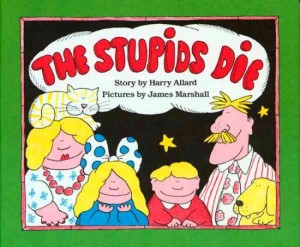
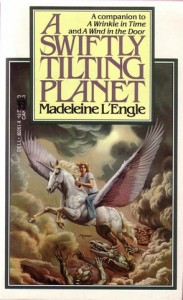
Choosing a title is the fun stage of writing a book. The hard work over, I spend hours happily test-driving pithy, bizarre or lyrical titles. The greatest children’s titles describe some aspect of the plot, setting, or character, in striking words. My favourites titles are A Swiftly Tilting Planet and The Stupid’s Die; and I quite like my own, Global Norman (about global warming). Here are some classic titles of children’s literature:
* Character: Oliver Twist, Shrek, The Halfmen of O, Hairy Maclary from Donaldson’s Dairy, Flat Stanley
* Plot: Millions of Cats, Journey To The Centre of the Earth, The Shrinking of Treehorn
*Setting: Outside Over There, The Horror of Hickory Bay, The Black Island
*Theme: To Kill A Mockingbird, Something Wicked This Way Comes, Roll of Thunder Hear My Cry
* Joke: War and Peas, Squids Will Be Squids, Green Eggs and Ham
Tags: books, children's books, writing
Posted in Children's Books, Writing | Comments Off on Best Titles For Children
Wednesday, August 5th, 2015
The only thing to withhold is what happens next.– Orson Scott Card
I made a basic mistake while writing my latest children’s novel. I tried to create suspense by withholding information from the reader. The result was a confusing plot that had no gripping power – so I edited the opening chapters, introducing the central problem up front. The Hitchcock Principle is that you create suspense by showing the audience as much as you can, and as early as you can. He gives the example of two characters talking at a table for 5 minutes then a bomb explodes, providing a few seconds of surprise. But if we see the bomb under the table from the start of the scene, it provides 5 minutes of suspense.
Give your readers as much information as possible as soon as possible. – Kurt Vonnegut
As soon as the character engages with the problem, narrative tension starts. – Norman Bilborough
The worse drafts hide information, wrongly believing that just giving a hint here or there is the best strategy.– Darcy Pattison
Tags: movies, writing
Posted in Writing | Comments Off on Writing Suspense
Friday, April 10th, 2015
The first step towards being a writer is to hitch your unconscious mind to your writing arm.– Dorothea Brande
The 1934 classic Becoming a Writer, by Dorothea Brande, is a practical writing book which is also in tune with current neuroscience. Brande wrote that the writer’s unconscious mind should ‘flow freely and richly, bringing at demand all the treasures of memory’ – meanwhile the conscious mind does the hard work to ‘control, combine and discriminate’ words and sentences. Our unconscious is the source of our most original stories but it’s a reluctant creature, resisting the discipline that writing requires. Brande has some intriguing exercises designed to tap into the unconscious:
- Writing immediately after you wake up before any associations invade the mind.
- Writing at a prearranged time every day.
- Moments of meditation and mindfulness.
Brande also says, most importantly I think, that every writer has something unique to offer the world:
There is just one contribution which every one of us can make: we can give into the common pool of experience some comprehension of the world as it looks to each of us.
Tags: consciousness, writing
Posted in Writing | Comments Off on Unconscious Writing
Sunday, November 23rd, 2014
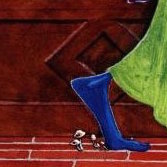
The Grey Lady and the Strawberry Snatcher is a classic picture book that almost didn’t make it. It took Molly Bang years to create and it was repeatedly rejected by publishers – they said it was ‘peculiar-looking’ and that ‘children won’t relate to an old woman as a protagonist’. The manuscript sat in a drawer for years, was re-worked and finally published to some critical reviews, writes Molly Bang: ‘The New York Times that said that the weird-looking characters and flashy colors were an indication that I was part of the drug culture and the detailed pictures told no real story but were merely an excuse to show off.’ Then it won a Caldecott award and everything changed. Why? It’s a one-of-a-kind, off-the-wall book, and very creepy! I love the tiny fungi that grow where the Strawberry Snatcher has trod.
Tags: children's books, picture books, writing
Posted in Book Reviews, Children's Books, Writing | Comments Off on The Strawberry Snatcher book
Saturday, November 1st, 2014
I’m writing a sci-fi novel and falling into two traps: Infodump and Unobtainium.
Infodump is a when a character gives a mini lecture — telling instead of showing — such as in reply to “Tell me, Professor, how does your invention work?” Infodump can be reduced by editing out any techno-babble, and by using characters to give brief explanations only when plot demands it to move forward.
Unobtainium is a plot device such as an alien substance or a future technology. Most sci-fi has these but too often they’re used by writers to remove a plot hole; as in ‘Lucky I brought my sonic screwdriver to do this impossible task.’ (A version of: ‘Any sufficiently advanced technology is indistinguishable from magic’– Arthur C Clarke). Possible solutions are to make your ‘Unobtainium’ central to the plot (eg. give it a snappy back-story), or reduce it to a playful bit of science.
Tags: science fiction, writing
Posted in Sci-Fi, Writing | Comments Off on Writing Sci-Fi: Infodump & Unobtainium
Tuesday, April 22nd, 2014
‘There are moments, Jeeves, when one asks oneself, “Do trousers matter?”’
‘The mood will pass, sir.’
P.G. Wodehouse (WOOD-house) created a world without earthquakes, wars or dictators (except Roderick Spode whose ‘eye that could open an oyster at sixty paces’); where nothing mattered, except tidy trousers, and nothing broke, except engagements. He was a brilliant writer who cooked up similes like a master chef:
His legs wobbled like asparagus stalks.
She looked like a tomato struggling for self-expression.
Her face was shining like the seat of a bus-driver’s trousers.
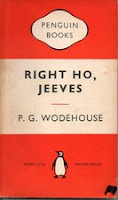
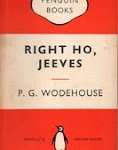 Wodehouse published 90 books, writing until his death at 93 years. When asked about his technique he said ‘I just sit at a typewriter and curse a bit’. All his books make me happy, but my favourite is Right Ho, Jeeves, about Bertie Wooster and his valet, Jeeves, who is ‘so dashed competent in every respect’. The chapter where Gussie Fink-Nottle presents the prizes at a private school is a great example of slow-building comedy.
The sheer joy of stories which offer a world where things come right.– Sophie Ratcliffe (Wodehouse, Letters)
Read Stephen Fry’s tribute to P.G. Wodehouse.
Tags: books, humour, reviews, writers
Posted in Book Reviews, Humour, Writing | Comments Off on Wodehouse – a world where things come right
Thursday, September 19th, 2013
In the 1960s, Jane Goodall was criticised for saying chimpanzees have emotions. Today the evidence suggests she’s right although scientists remain wary of anthropomorphism – associating human traits with animals – often with good reason (eg. the gross inaccuracy of The Bee Movie in which boy bees did the work). Of course animals don’t see the world exactly we do, but we shouldn’t ignore what we have in common with them:
Anthropo-denial: A blindness to the humanlike characteristics of other animals, or the animal-like characteristics of ourselves. – F. de Waal
The weight of scientific evidence is that animal have thoughts, feelings and intelligence – animals are not mere ‘survival machines’. It’s now accepted that humans and animals share many traits (Marc Bekoff (The Emotional Lives of Animals); this fits nicely with evolution which teaches us animals are our relatives and all life is connected. Forgetting this relationship has led to the honey bee crisis, for example, as people have treated bees as tools rather than partners in pollination.
Acknowledged as individuals, those sparrows, salamanders and squirrels are not interchangeable parts of a species machine. They are beings with their own inner lives and experiences. – Brandon Keim (Animal Consciousness)
Using language that reflects our ‘common ground’ can help give children empathy with the natural world. When writing Flight of the Honey Bee I wanted accurate science yet also a sense of a bee’s experience. Should I use human concepts such as ‘know’, ‘remember’, captivate’, and ‘story’? Should I even call the bees ‘sisters’? The answer was yes. Honey bees have language, intelligence, and memory (and maybe something like emotions); and they’re more genetically sisters than humans.
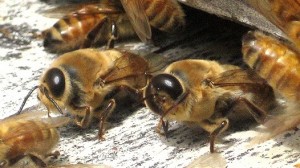
They are not us, but to look into their eyes is to know that someone is in there. Imposing our own specific thoughts and feelings on that someone is in one sense too imaginative, in presuming he could receive the world in the way we do, and in another not imaginative enough, in not opening our minds to the full possibilities of his difference.- Caitrin Nicol (Do Elephants Have Souls?)
Tags: connections, honey bees, science, writing
Posted in Bees, Science, Writing | Comments Off on Animal Imagination
Saturday, July 20th, 2013
There is just one contribution which every one of us can make: we can give into the common pool of experience some comprehension of the world as it looks to each of us.
Dorothea Brande (in the classic, Becoming a Writer) suggests our unconscious is a good source of original stories — but it’s a reluctant creature, resisting the discipline that writing requires. She describes several exercises designed to harness the unconscious:
- Writing immediately after you wake up before any associations invade the mind (or caffeine invades the body).
- Writing at a prearranged time every day.
- Meditation also improves clarity of thought.
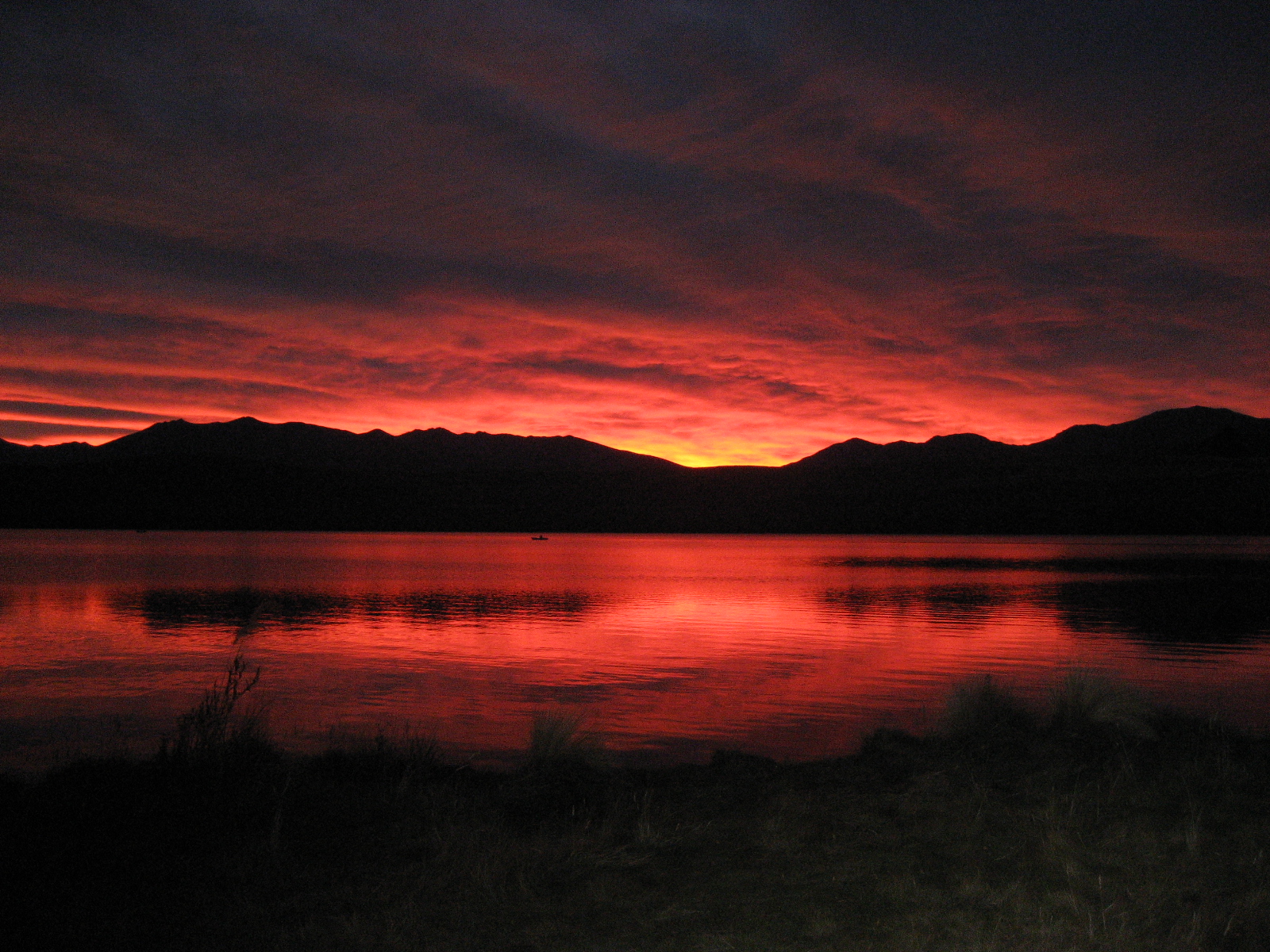
Photo: morning, Lake Alexandrina.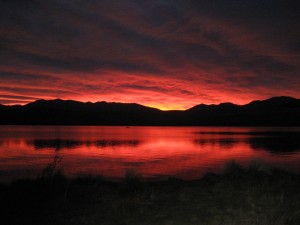
Tags: consciousness, writing
Posted in Writing | Comments Off on Tapping The Unconscious
Sunday, November 11th, 2012
1. Common Dreams: news articles on social, economic, rights issues (mostly US).
2. Utne Reader: best of the alternative press on environment, culture, community.
3. Brain Pickings: nicely curated blog on creativity and culture.
4. Letters of Note: fascinating personal letters from famous people.
5. Templeton: Big Questions Essay Series on science, morality, religion, economics.
Tags: political change
Posted in Writing | Comments Off on 5 Inspiring Websites
Friday, March 23rd, 2012
The imagination of the good artist or thinker produces continuously good, mediocre, and bad things, but his judgment, trained and sharpened to a fine point, rejects, selects, connects… All great artists and thinkers [are] great workers, indefatigable not only in inventing, but also in rejecting, sifting, transforming, ordering. Nietzsche
Imagine, a new book by Jonah Lehrer – author of Proust was a Neuroscientist – is about creativity and the brain. Lehrer believes that creativity is our natural state and, like Neitzsche, he stresses the role of synthesising:
The synthesizing mind takes information from disparate sources, understands and evaluates that information objectively, and puts it together in ways that make sense… the capacity to synthesize becomes ever more crucial as information continues to mount at dizzying rates.
Perhaps synthesising is another word for the endless mulling, rewriting and editing that writers go through. David Ogilvy was one of the original 1960s ‘ad men’ referenced in TV’s Mad Men. He described the creative process of writing advertising copy as ‘a slow and laborious business’ of redrafting and editing (read his full letter here).
Does the ‘dizzying’ internet make us more creative? In a fascinating essay about the brain and computers, Jim Holt argues that while the internet sharpens many cognitive skills, it may be the enemy of creativity. The problem is that the web can be distracting (rather than reflective) for the brain and it barely engages with deeper levels of thought. Holt calls Google a ‘memory prosthesis’. That might be true but it does make synthesising a blog a lot of fun.
Talent develops in tranquility. Goethe
More: editing; and writing and computers
Tags: brain, writing
Posted in Science, Writing | Comments Off on Creativity, Google and Mad Men
Tuesday, February 14th, 2012
Once you have decided which aspect of your story is care about most then it’s a good idea to signal this from the very beginning. Orson Scott Card suggests beginning with a question for the reader. A question does two things: it creates tension and it creates a desire to know the answer.
The beginning must make the reader ask questions that are answered by the stories ending. – Orson Scott Card
Examples from different aspects of story:
- Milieu: Begin with the arrival of a stranger who asks “What makes this place tick?”
- Idea: Begin with a mystery, such as ‘Whodunnit?’ or ‘Why is weird stuff happening?’
- Character: Begin with a character asking ‘How can I change?’
- Event: Begin with a character asking ‘How can I survive this/save the world?’.
Ray Bradbury is good at posing questions in the opening of his short stories. A Sound of Thunder begins with an explorer asking “Does this [time] safari guarantee I come back alive?”. The ending provides a satisying answer– ‘you will come back alive but you’ll wish you hadn’t.’
Tags: orson scott card, Ray Bradbury, science, writing
Posted in Sci-Fi, Writing | Comments Off on Writing Sci-Fi: Beginnings
Friday, February 10th, 2012
In his wonderful book How to Write Science Fiction and Fantasy (p.76), novelist Orson Scott Card says all stories contain 4 basic aspects: Milieu, Idea, Character and Event (MICE!). Here are some sci-fi examples (YA):
- Milieu: about a world or a society. Eg. Running Out of Time by Margaret Haddix about time travel to a past society.
- Idea: begins with a mystery to answer. Eg. Protus Rising by Ken Catran, murder mystery in space.
- Character: about character transformation. Eg.The House of Scorpion by Nancy Farmer about a clone who develops values.
- Event: when something goes wrong in the world. Eg. Box by Penelope Todd about an epidemic that strikes New Zealand.
Which aspect of the story matters most to you? That is the aspect that will give you the story’s structure. – Orson Scott Card
Tags: children's books, science fiction, writing
Posted in Children's Books, Sci-Fi, Writing | Comments Off on Writing Sci-Fi: Structure
Sunday, November 20th, 2011
Every writer I know has trouble writing. – Joseph Heller
Confession: I play 1960s TV themes while I write. Mission Impossible is the best:
A pale car stops alongside a dingy desk. A writer gets out, unlocks the desk and takes out a laptop. His mission, should he decide to accept, is to release a novel from captivity. Should the plot fail, he will disavow any knowledge of the effort and his career will self-destruct in five rejections. The writer opens a file and selects likely characters: a trickster, a tough guy, a feisty female. After a planning session the plot is all action. The set-up is smooth, tension rises, but everything falls apart near the end. A contrived twist saves the novel (endings are difficult).
The dynamic theme to Mission Impossible is by Argentine composer, Lalo Schiffrin. This artful video commercial portrays Schiffrin in the composing process.
Tags: humour, movies, writing
Posted in Writing | Comments Off on Mission Impossible
Monday, July 25th, 2011
‘Tell all the Truth but tell it slant. Emily Dickinson
There’s talk of compulsory laptops and iPads for primary schools, but evidence suggests that books should be the priority for children. A good novel is more likely to engage the brain than a screen. Reading is a ‘neuronally and intellectually circuitous act’ (Maryanne Wolf) – or to put it another way, a novel encourages the reader’s brain to be active in the construction of the story. Wolf also argues that more indirect the writing the more enriching it is for the brain.
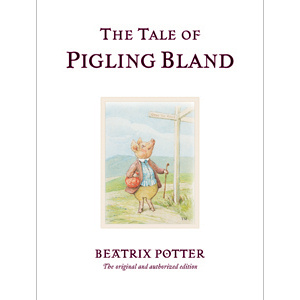 Clive James comments on this (in Cultural Amnesia) in his essay celebrating the eloquence of Beatrix Potter. He recalls how his own children were fascinated by slant and mysterious phrases such as ‘eight conversation peppermints with appropriate moral sentiments’ and ‘Alexander was volatile’ in The Tale of Pigling Bland (one of the great character names). James concludes that
Children like to hear good things said a thousand times.
Tags: brain, children's books, writers
Posted in Children's Books, Reading, Science, Writing | Comments Off on Pigling Brains
Tuesday, July 19th, 2011
Alone we are one drop, together we are an ocean Ryunosuke Satoro
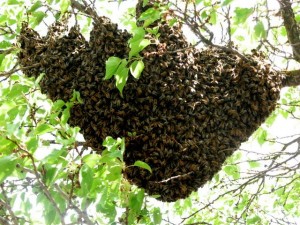 Honey bees are a super-organism: each one working for the health of the whole. In the same way many people contribute to a book. At the writer’s end: family, friends, writing group, experts, research subjects. At the publishers: editor, proof-reader, designer, publicist, education coordinator, accountant. In the world: distributors, retailers, reviewers, website designer, media, networkers and most importantly, readers. Readers are the book’s power — an unread book will wither like a hive without a queen.
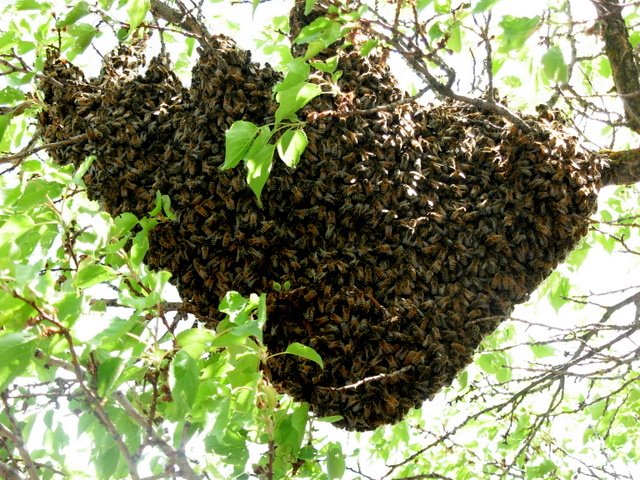
Photo: Swarm by Sarah Anderson
Tags: books, honey bees
Posted in Bees, Reading, Writing | Comments Off on Book People
Friday, July 1st, 2011
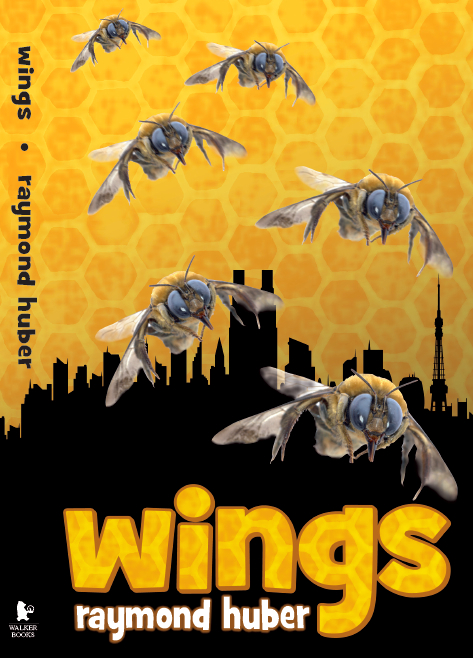
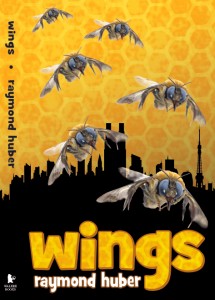 My new honey bee novel for children, Wings, is launched today. It grew from a couple of seeds: the pesticide threat to bees and a fascination with giant hornets (it was almost titled ‘Hornet’). While writing, I learned a lot about character ‘balance’ – they do take on their own life, but you need to nudge them now and them. I had fun with the nasty hornet (Torgo), the loopy acid-bee (Ash), and a puzzle snake (Fang). Hardest part was deciding about the death of a character. I’ve tried to create a gripping tale; and trusting in the power of story (okay, and a good editor) I hope readers will see bees in a new light.
…when reading takes place, that individual brain is forever changed, both physiologically and intellectually. Maryanne Wolf
Posted in Bees, Children's Books, Sci-Fi, Writing | Comments Off on New Bee Book
Wednesday, April 13th, 2011
Writer Dorothy Sayers (in The Mind of the Maker, 1941) suggested every creative act has three elements: Idea, Energy and Power. The Idea remains intangible until the story writing begins. The Energy is the activity of writing the book. The Power is the response the book produces in the reader – ‘The thing that flows back to the writer’.
I’m amazed when starting a new story how a shapeless idea in my head generates a story. As the characters are given energy they help me create the story; and by the end it’s as if they always existed. Then each reader has a unique response to the book.
Tags: connections, writing
Posted in Writing | Comments Off on The universe is made of stories