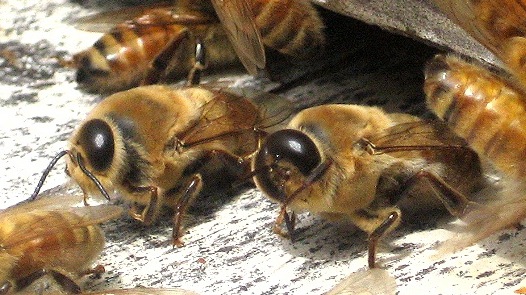
It’s the most important relationship on Earth – everything in Nature depends on pollinators and flowers getting together.
Pollination is ‘a love story that feeds the Earth.’ – Louie Schwartzberg.
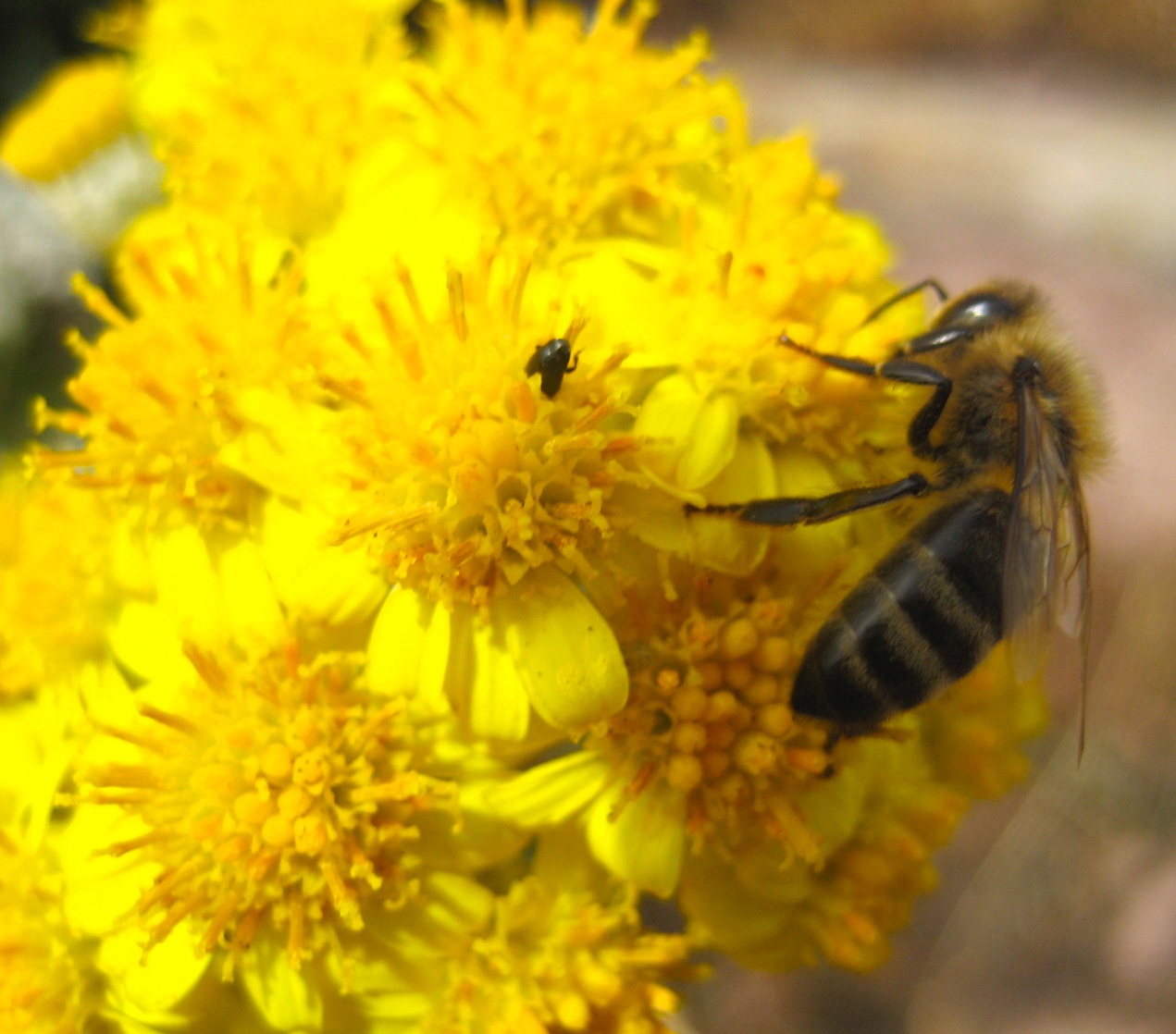
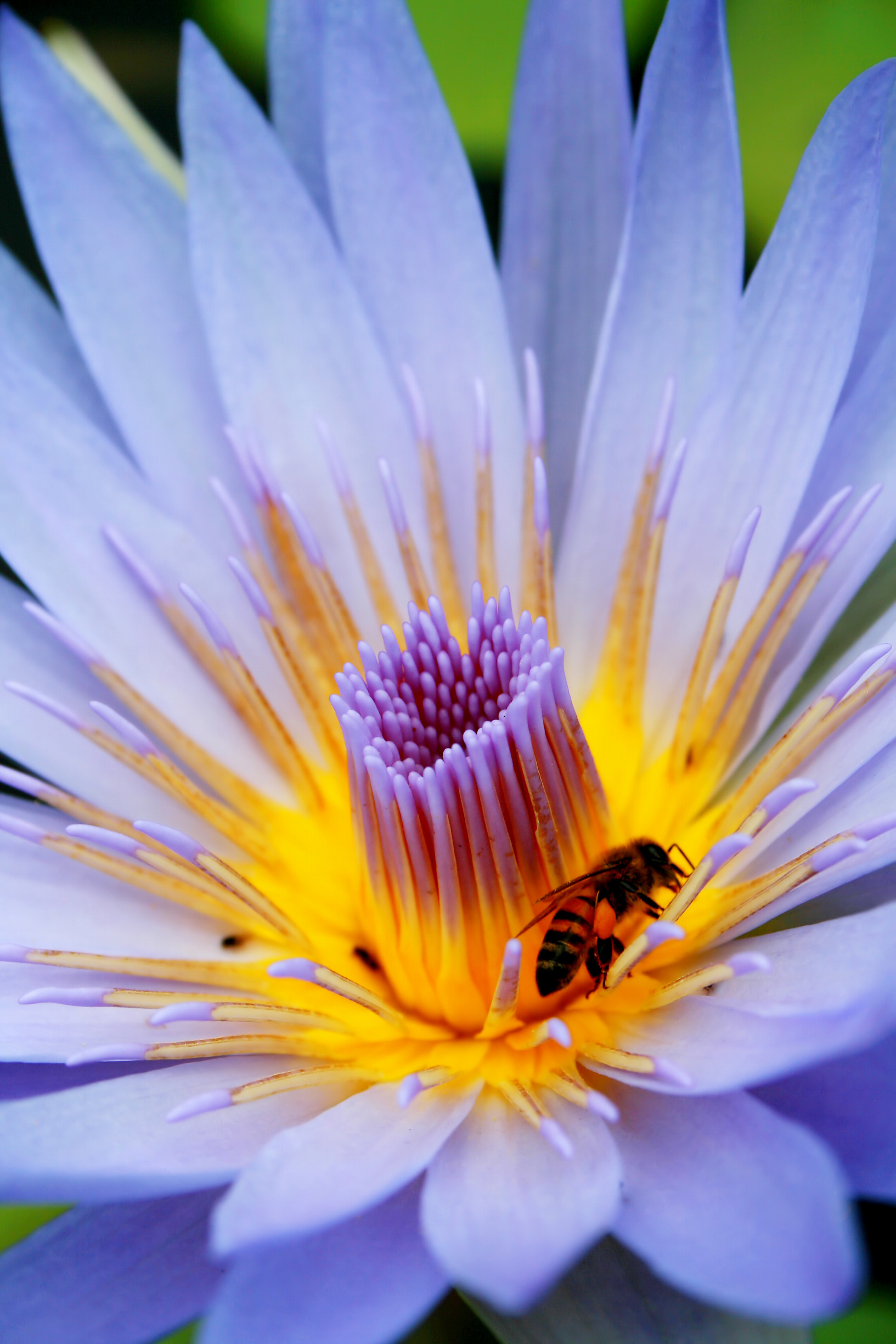
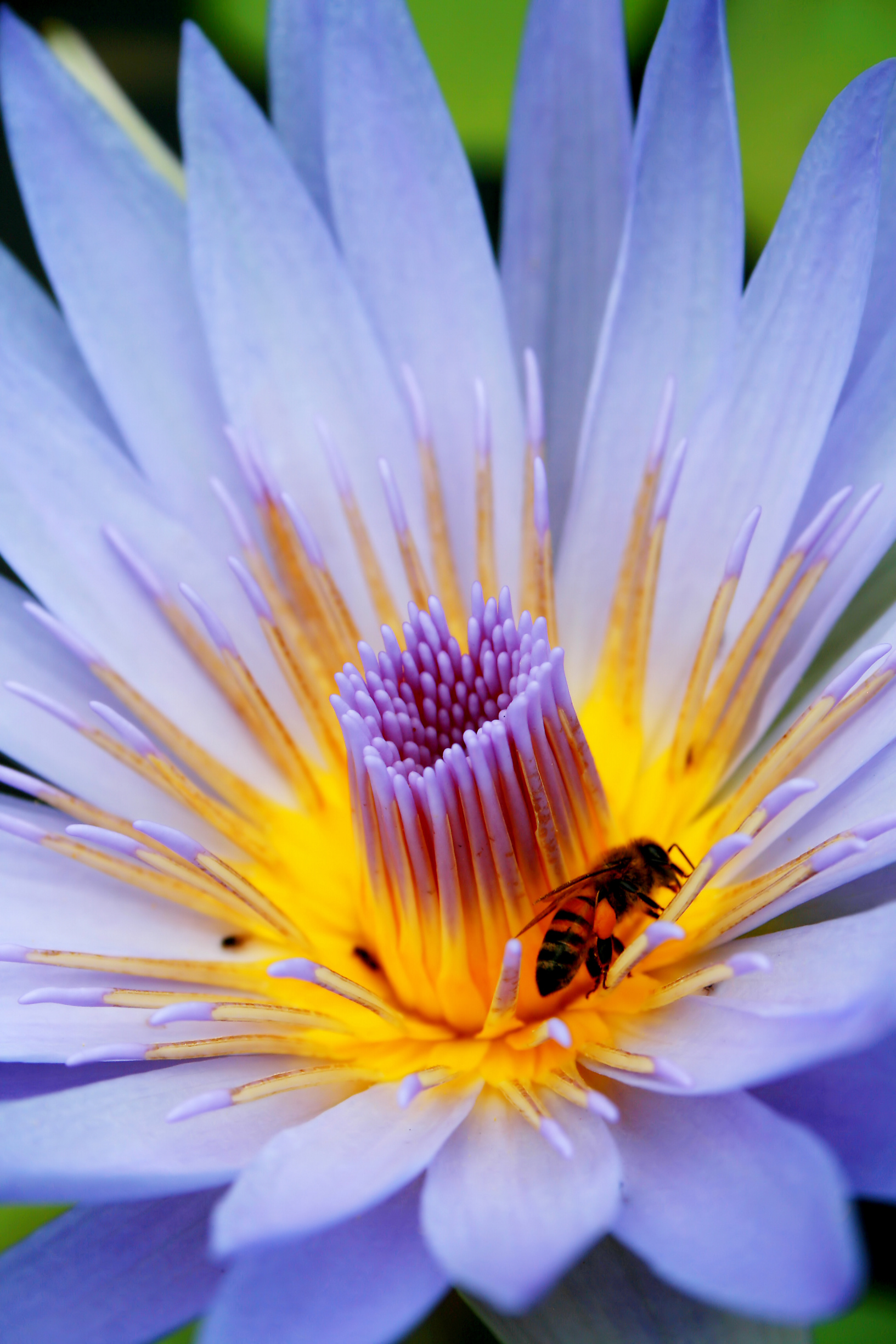
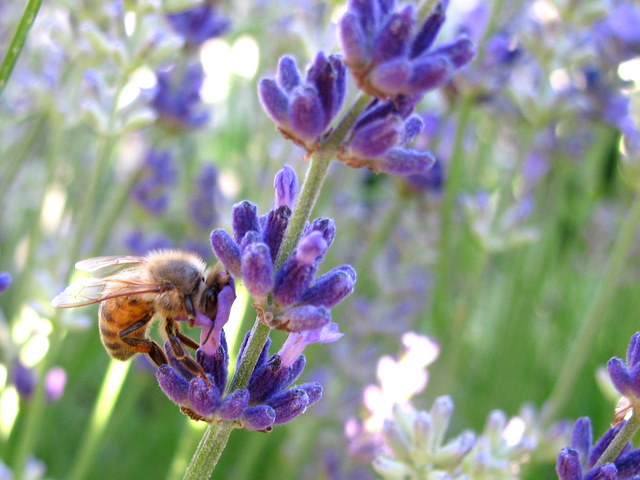
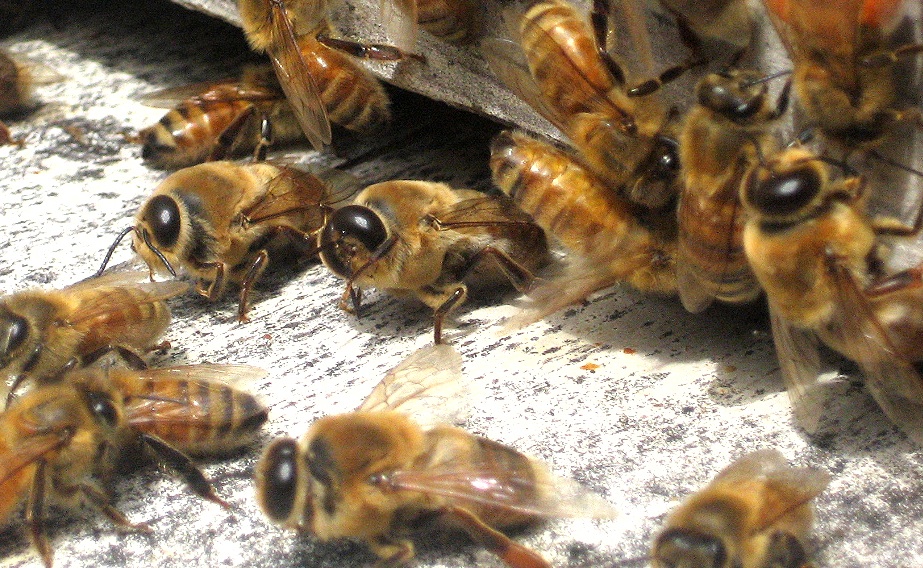
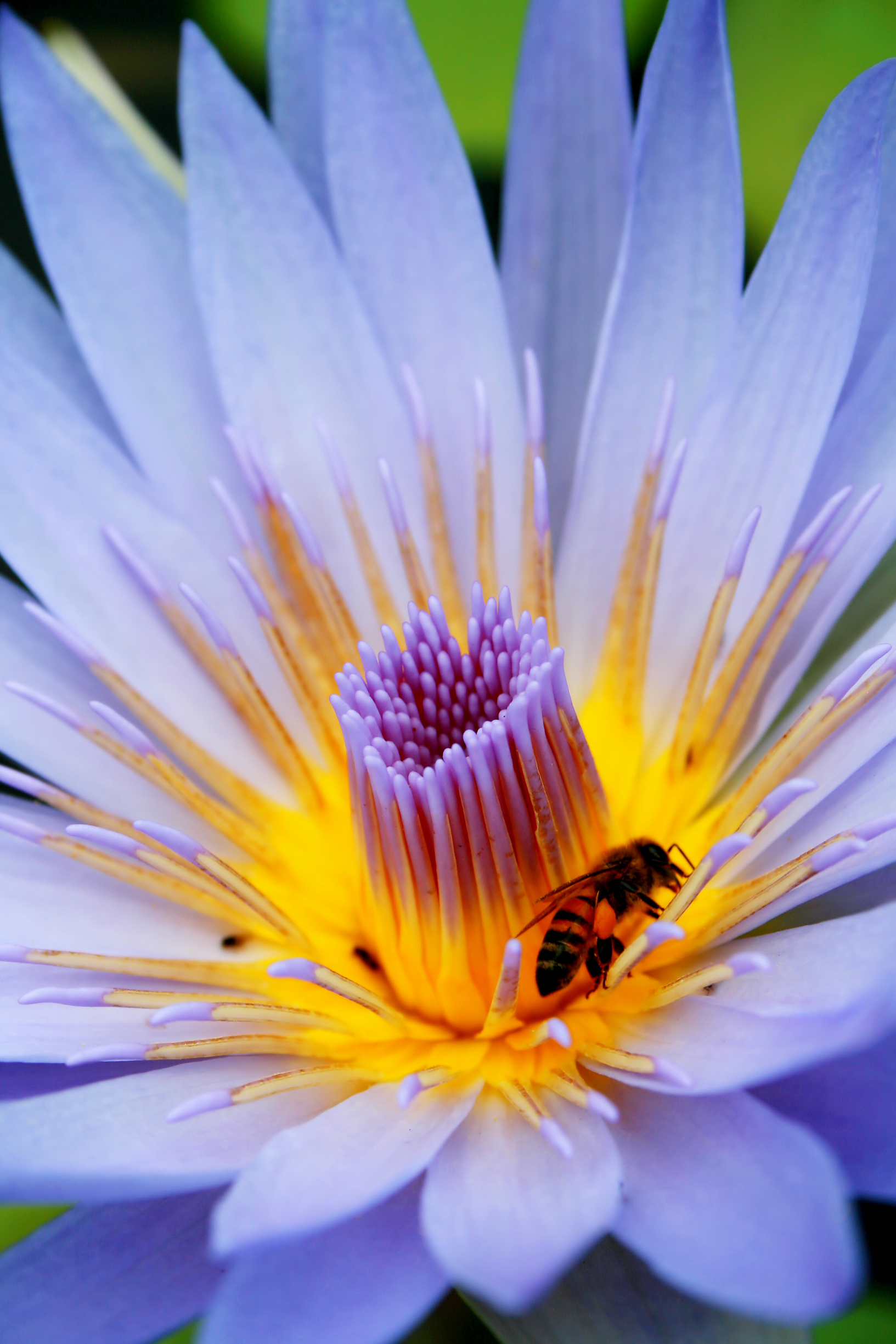
For a flower to make seeds and fruit, its pollen (male) must move to an egg (female), usually in another flower – and bees do most of the pollen-moving. The result is a cornucopia of foods from cherries to cashews to coffee. Humans’ relationship with pollinators is also crucial, so let’s provide bees with a variety of flowers, clean water, and poison-free gardens.
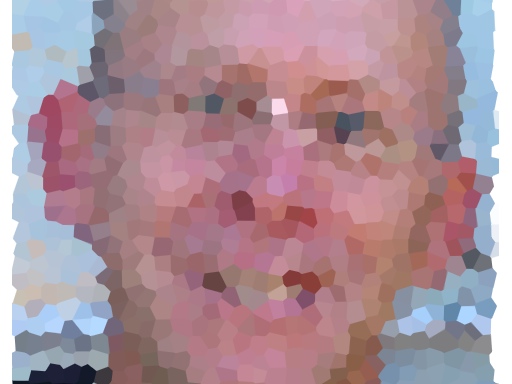
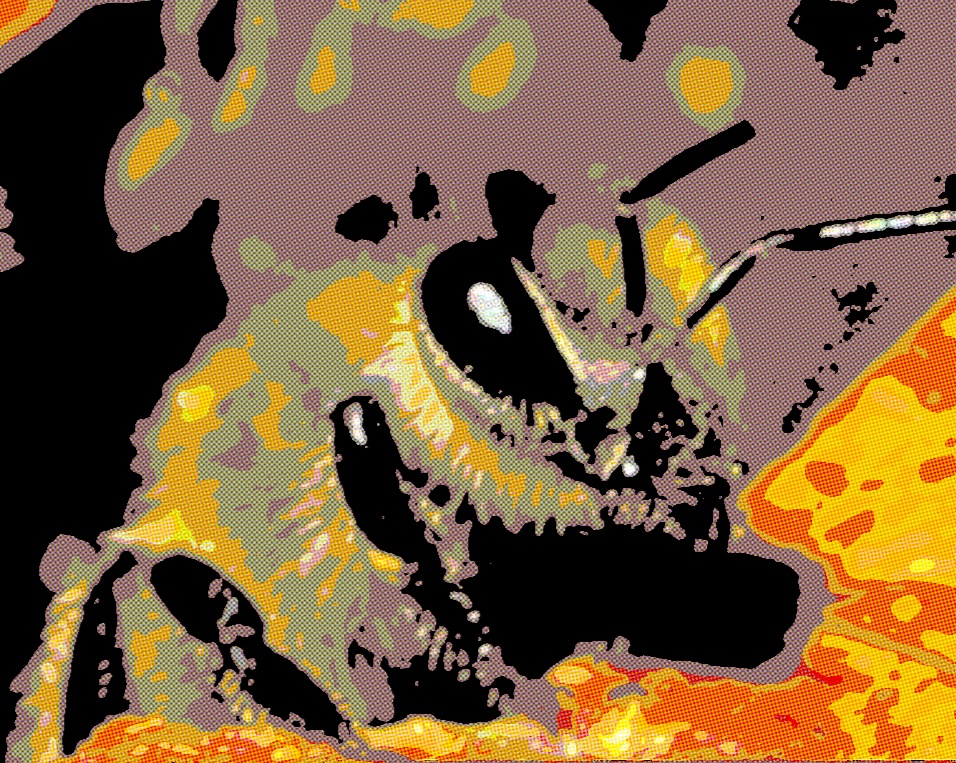
Older beekeepers often tell me that their honey bees recognise them – now there’s research to support this. Honey bees’ brains are the size of a sesame seed with only 1 million neurons (we have 100 billion!) but bees can learn patterns, navigate, communicate, count, tell time, measure, and memorize. They can also recognise human faces. Honey bees don’t have distinctive ‘faces’ so this ability is more about their pattern-recognition skills (I wonder if it’s also about their close relationship with humans). Here’s how I might look to a bee with it’s many-faceted compound eyes (squint to see my face!):
The life of the bee is like a magic well: the more we draw from it, the more there is to draw.’ — Karl von Frisch
We fill our lives with honey and wax.. giving humans the two noblest things, which are sweetness and light. – Jonathan Swift (Gulliver’sTravels) 1773
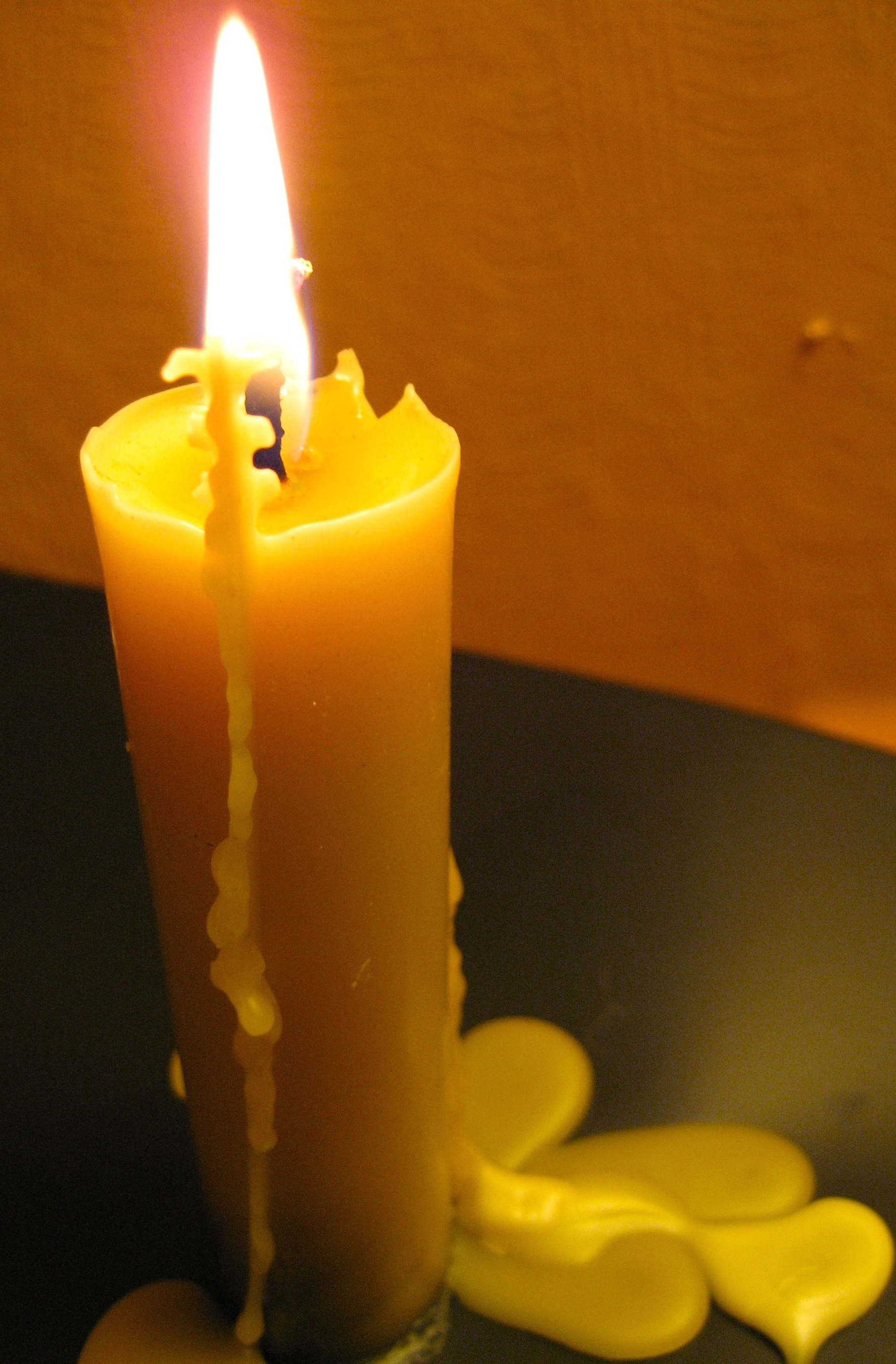
Honey bees give us golden gifts as well as honey: wax, propolis, and pollen. Beeswax (made inside bees’ bodies) has oodles of uses, including in food-wrap (goodbye plastic!), polish, jelly beans, artists’ media, dental floss and cleaning up oil spills. It’s a best for candles because it gives a sweet scent and a lustrous, smokefree light. Propolis is the bee’s cleaning product – a sticky, germ-killing resin they collect from plants. It’s used to plug cracks and keep the hive healthy. Propolis fights infection in humans, especially in the mouth. Pollen is rich in protein and vitamins for the bees; but humans eat it too. The boxer, Muhammad Ali, ate pollen, which may explain his motto: ‘I float like a butterfly, sting like a bee’.
The second most complex language on the planet. – Professor James Gould
We communicate with the alphabet; honey bees are the only other creatures we know of that use symbols: their dance movements. When a bee finds a patch of flowers she goes home and dances for her sister bees. The dance shows the other bees both the direction and the distance to the flowers.
Direction: told by the angle of the dance. For example, if the bee dances straight up the honeycomb it means ‘fly straight towards the sun’.
Distance: told by waggling. Each waggle of the bee’s body means a set distance: eg. one waggle might mean 50 metres, so 10 waggles = 500 metres to fly. A faster waggle dance means the flowers have plenty of nectar.
Remember that bees dance in the dark! The audience gets the message through touch, sound, smell, and taste.
We can’t survive without bees and bees won’t survive unless we love them. It’s a unique partnership between ‘wild’ creatures and humans: honey bees give us fruit, vegetables, and pastures – we must make sure they have a variety of flowering plants and clean habitats (avoid pesticides, especially neonicotinoids).
Human beings have fabricated the illusion that they have the technological prowess to be independent of nature. Bees underline the reality that we are more, not less, dependent on nature’s services. – Achim Steiner
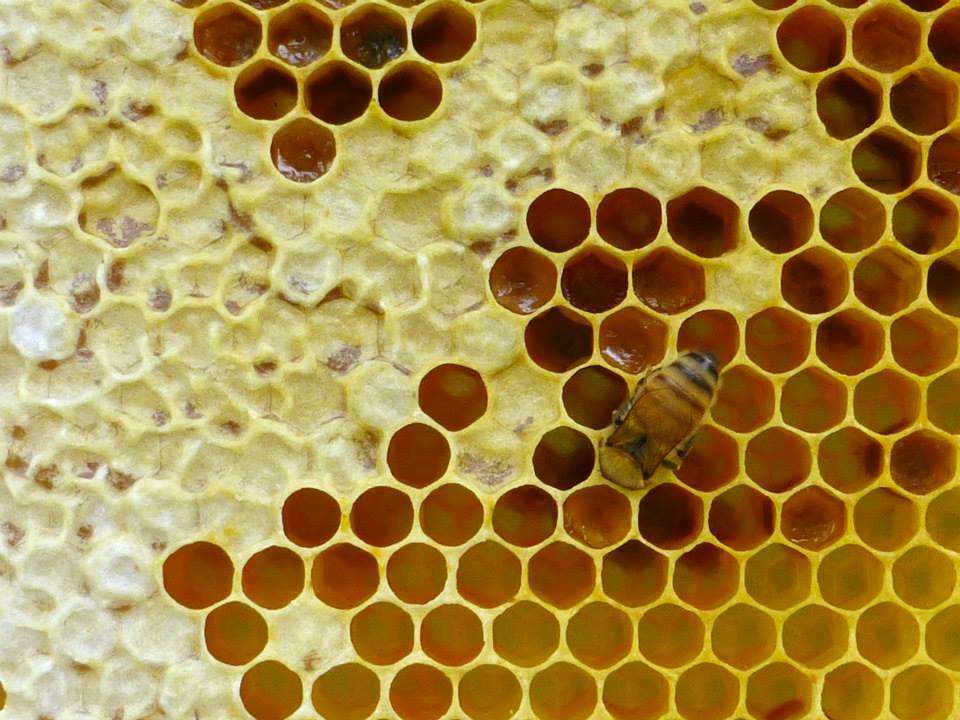
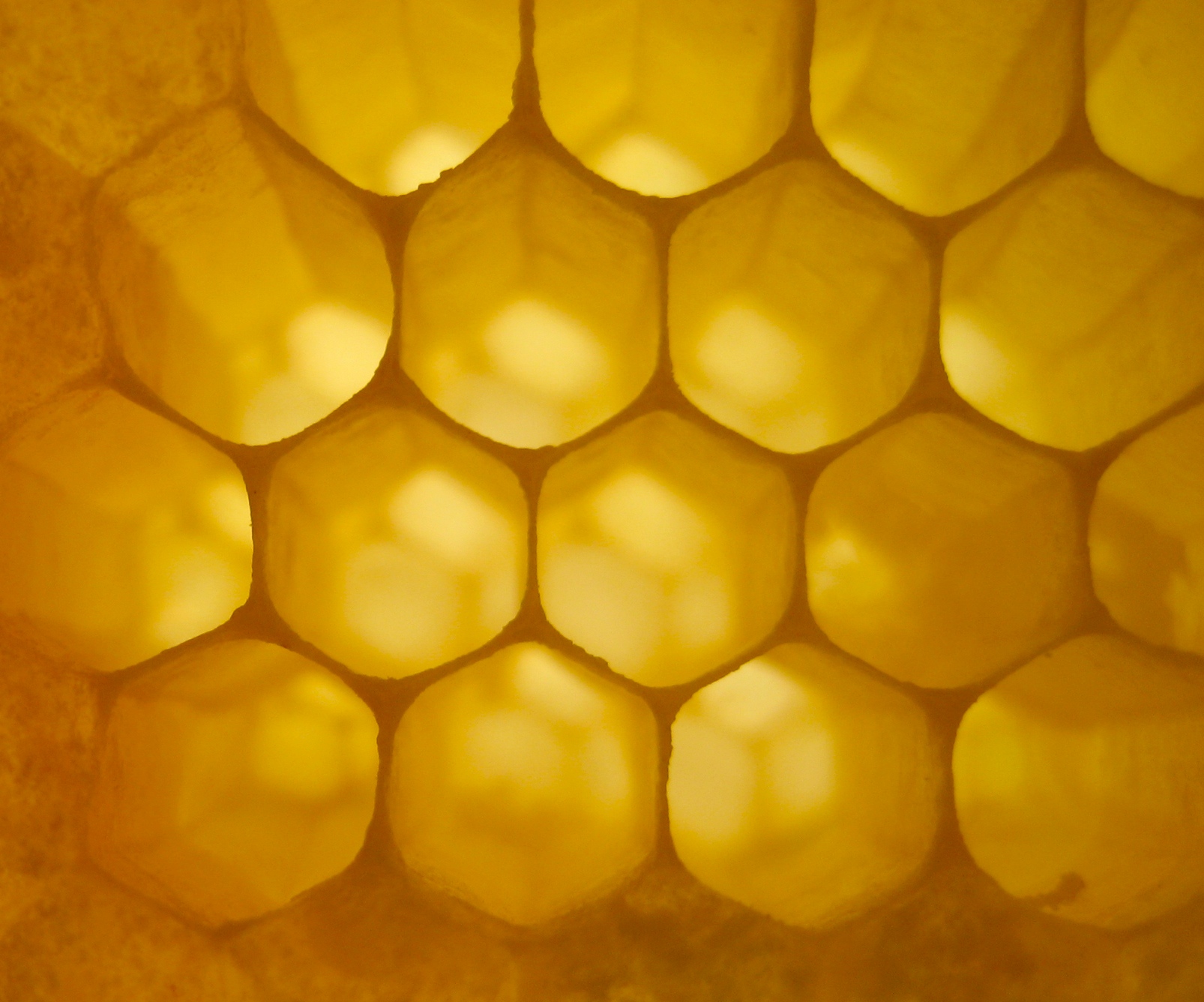
A honeycomb is made from wax produced by bees, and shaped into near perfect hexagons. The comb is not only a pantry for storing honey, it’s also the bee’s kitchen, nursery, bedroom and dance floor. This photo shows cells in the comb used to store honey – the bees put a layer of white wax ‘capping’ over the honey to preserve it.
This next photo shows cells used to raise baby bees (the white larvae are visible in some cells). These larval cells are then capped so the bee can develop into an adult. Lovely photos by artist Claire Beynon (click to enlarge).
Honey bees have a body clock to keep track of time – this is vital because flowers produce nectar at different hours of the day – eg. dandelions at about 9AM. We have a similar inner clock but most of us rely on outer clocks to tell the time. If our devices were removed we’d probably revive our body clock. Bees learn very quickly: scientists trained some bees to feed (on sugar water) at 10.30AM, and after that the bees turned up at exactly that time to be fed every day.
How doth the little busy bee
Improve each shining hour – Isaac Watts
For a long life, breakfast daily on honey. – Pythagoras
Human beings have fabricated the illusion that they have the technological prowess to be independent of nature. Bees underline the reality that we are more, not less, dependent on nature’s services… – Achim Steiner
Life is all one – as big as the world and as small as a honey bee. – Hattie Ellis
Bees – their feet are dusted with spices from a million flowers. – Ray Bradbury
We have rather chosen to fill our hives with honey and wax; thus furnishing mankind with the two noblest of things, which are sweetness and light. – Jonathan Swift
The comb of the hive bee is absolutely perfect. – Charles Darwin
Honey bees are the glue that holds our agricultural system together…Hannah Nordhaus
One cause of the current honey bee decline is monocultural farming: bees are starving because of a lack of flower diversity. You can help by planting bee-friendly fruit trees, bushes, herbs and wild flowers, such as:
Nectar-rich flowers: clovers and mimosa; rosemary, thyme and sage; koromiko and veronicas; brassicas; dandelion, sunflower, dahlias, cosmos, and zinnia
Bluish-purple flowers such as Californian lilac, erica, and lavender
The bee is the only creature on the planet that is a true creative artisan. It gathers materials and transforms them to make not only architecture but food.– Claire Preston
In the late 18th century, this slang term for something stylish and excellent actually referred to something small, weak or insignificant, such as the joint in a bee’s little leg.– Time
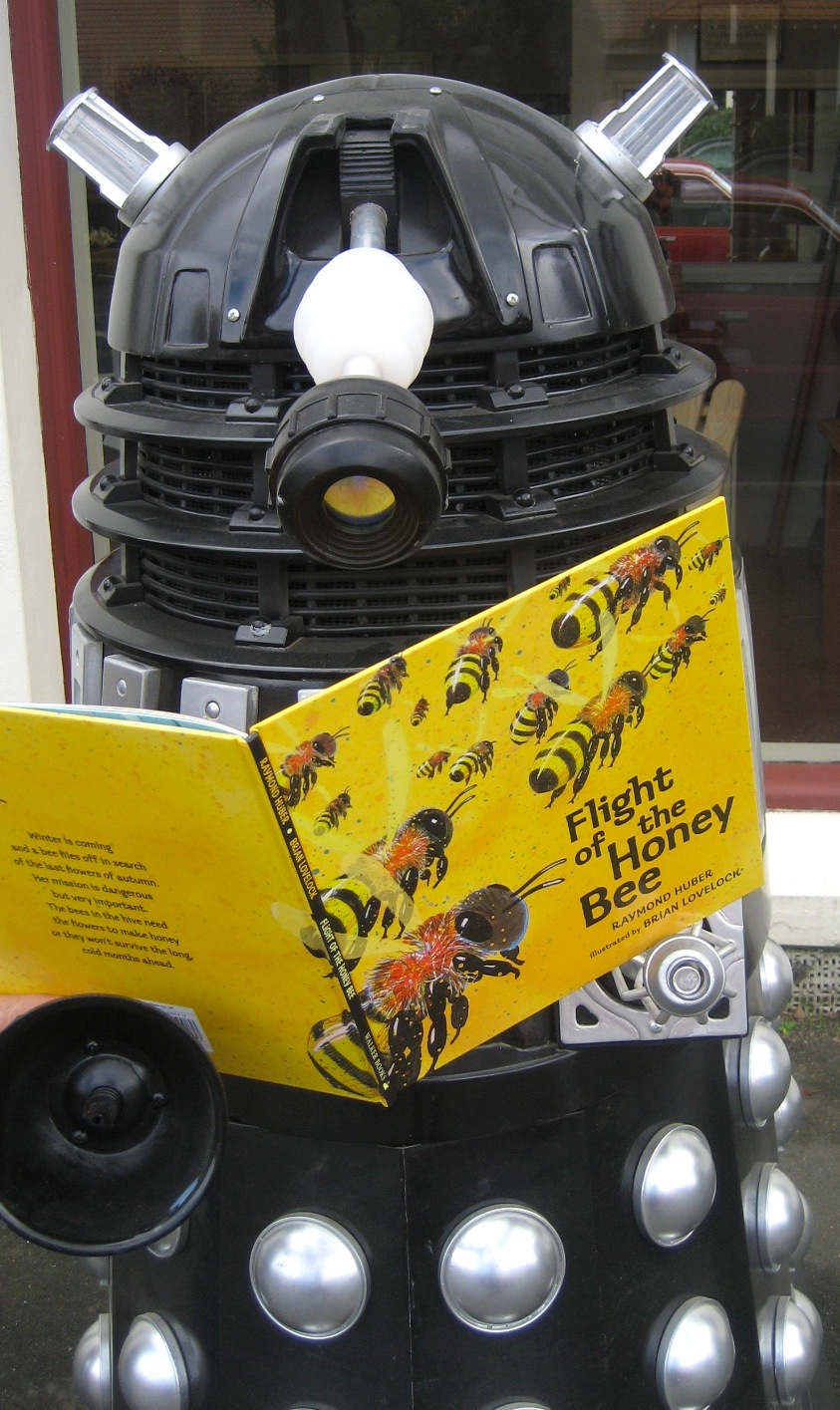
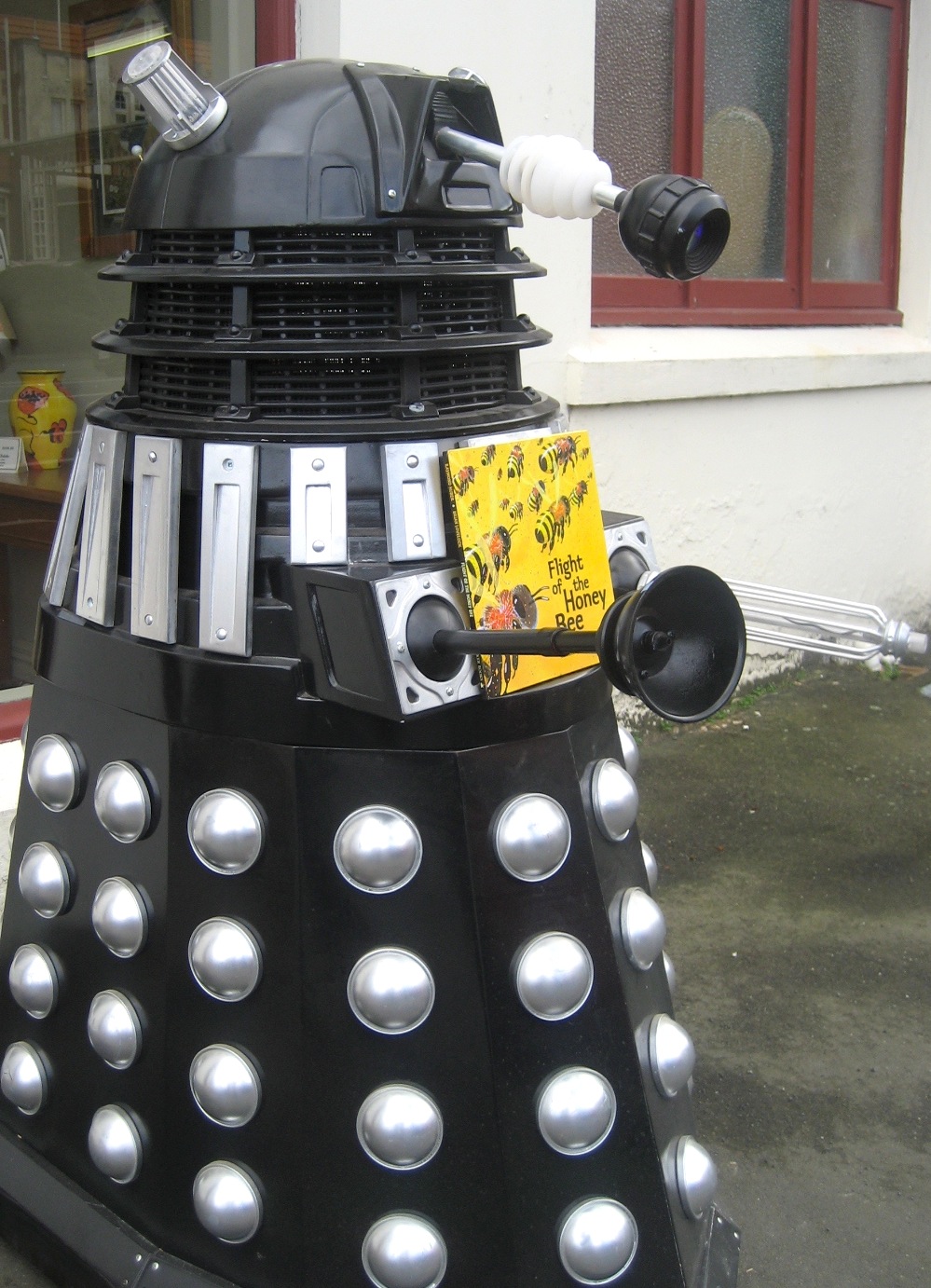
Perhaps it’s because the Daleks have a ‘hive mind’, a collective consciousness – much like honey bees which communicate in the hive by smell, touch, and by democratic systems.
Listen to the Dalek High Commander speak:
Dalek hand-made by Barry Renwick, Woodstock Furniture Makers.
In late autumn most of the male bees (drones) are pushed outside the hive to die – the female worker bees can’t afford the honey to feed them all. In winter, the large bee family huddles together in a tight ball which traps the heat of their bodies. It’s amazing that even when it’s way below zero outside, bees can keep the cluster at around 95˚F (35˚C). To adjust their temperature, bees vibrate their wing muscles and constantly change places with each other within the huddle. This close cooperation means bees can control the temperature and survive in almost any climate. Bees eat their honey in winter and on the odd fine day they fly outside to poo, as is their hygienic habit.
Honey is a symbol of grace – a gift freely given by honey bees – and saints were known as ‘Divine Bees’ because they often led lives that expressed grace and love. Saint Nicholas was born about 280 AD into a rich family, but when his parents died he used his great wealth to help the poor and sick, giving them gifts in secret. He became a bishop and because of his beliefs he was imprisoned by the Roman Emperor, Diocletian. Today Nicholas is the Patron Saint of Greece and possibly the model for the gift-giving Santa Claus. Honey is given as a gift to children on St. Nicholas’ Day.
A painting of St. Nicholas (1294):
Tags: honey bees Posted in Bees | Comments Off on Bee Christmas
Bees and humans are partners: we can’t survive without their pollinating skills and bees can’t survive without a clean environment. Keep the bee partnership alive by donating to these charities:
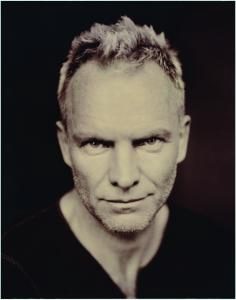
1. Bees For Development: combats poverty by teaching beekeeping in poor communities. Their patron is Sting, naturally (Photo: Paolo Roversi). Great website too: Bees For Development.
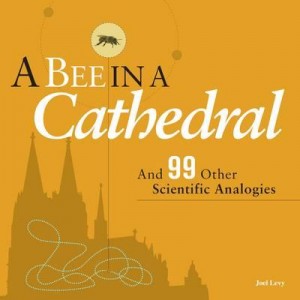
A Bee in a Cathedral by Joel Levy is a fascinating book of science analogies and astonishing numbers. Suitable for all ages, only the physics section is a bit complex. A few of my favourites factoids:
Every day 1 million meteoroids strike the Earth
How far to the nearest star, Proxima Centauri? Travelling in a rocket at 250,000km/h, it would take you 18,000 years
Most of the living cells in your body are less than a month old
About 50 million neutrinos are passing through you now
Every molecule in a glass of water is changing partners billions of times a second.
How hard does your heart pump blood? Empty a bathtub in 15 minutes using only a teacup —repeat this without stopping for the rest of your life
If an atom were blown up to the size of a cathedral, the nucleus would be no larger than a bee buzzing about in the centre.
Male bees (drones) have a decadent life inside the hive but it ends gruesomely. In spring and summer drones spend their days eating and sleeping – the female bees even clean up their droppings for them. In autumn the females push most of the drones out of the beehive to die in the cold air. Why have drones at all? To mate with a new queen, but it only happens once every few years. Several drones will mate with her and die in the act. Drones themselves have no father; they hatch from unfertilised eggs. It was once thought all bees came from virgin births, until in 1788 a blind Swiss naturalist, Francois Huber, proved that queens mated.
What big eyes the drones have; all the better to find the queen.
Honey bees have six (girl) powers to match any comic-book super hero. And like every super hero bees have one fatal weakness: when a bee stings you, it dies.
1. Super Flyers
Like Superman, bees are great flyers. A bee flies about 1000 km in her life. If she was human sized, that’d be like going five times around the planet. And she can carry 122 times her own weight.
2. Super Attractors
Like Magneto, honey bees use electro-magnetic forces. They have their own navigational GPS thanks to millions of magnetic crystals that sense the Earth’s magnetic field. Bees also have an electrical charge which attracts pollen.
3. Super Therms
Like Torch and Mr Freeze, bees cope with extreme temperatures. In the heat, air-conditioner bees fan their wings to cool the hive; and in the cold, bees huddle in a tight ball and shiver to keep warm.
4. Super Smarts
Like Professor X, bees are intelligent communicators. They are the only other creatures we know that use a symbolic language. The bee dance indicates direction and distance to flowers, and the quality of nectar. Bees can also tell time, measure, memorize, and solve problems.
5. Super Food
Like Wolverine, bees have healing powers. Honey is nutritious, lasts forever, and is a healer, killing bacteria and fungi. Manuka honey fights infection and heals burns. Bees use anti-bacterial propolis to keep their hives germ-free.
6. Super Transformers
Like Spiderman, bees can change their genetic structure. A queen bee is not born that way – any girl bee can become a queen. The worker bees prepare a royal baby by feeding it on royal jelly which triggers DNA change.
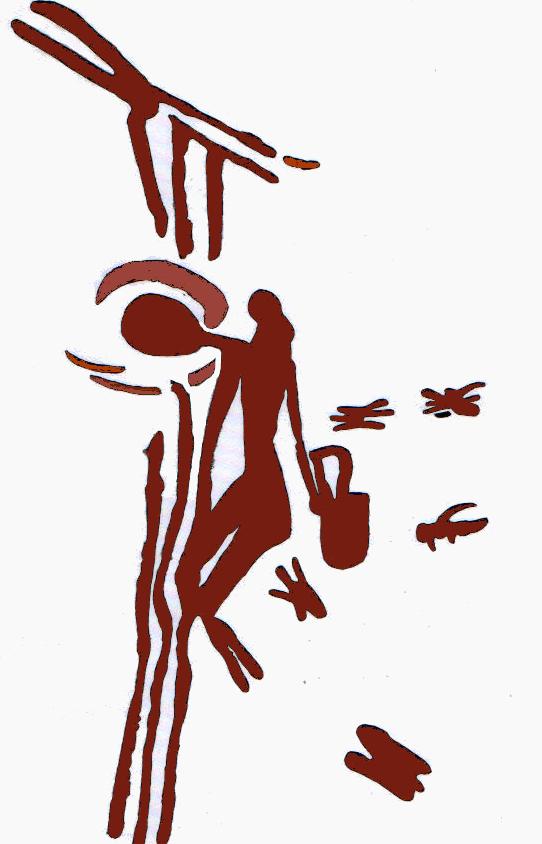
New genetic research suggests honey bees originated in Asia not Africa as previously thought. Bees have been around for a while: the oldest known bee is a 100 million year old bee suspended in a piece of amber (a tree resin), found in Myanmar (Burma). Ancient bees lived in trees or on cliffs – honey bees derived from cavity-nesting bees that spread out from Asia about 300,000 years ago. People discovered honey about 20,000 years ago; it must’ve seemed like a magical food in their diet of wild animals and plants. Early honey hunting was a dangerous job because bees lived in tall trees or on cliff faces. Cave paintings show hunters climbing cliffs to raid nests – imagine dangling from a vine, 150 metres up a cliff, while being stung by bees! People still do this kind of honey hunting today in India, Nepal, Malaysia and Indonesia.
Image: Rock painting of a honey hunter in Valencia, Spain (6000 to 8000BC)
The threat to nature is the same as that once posed by the notorious chemical DDT.– BBC News
A new study on ‘neonicotinoid’ pesticides says that they are a key factor in the decline of bees. The study combined 800 research papers from 20 years and concluded these nicotine-based nerve poisons are also damaging the wider environment. The pesticides are systemic – the whole plant remains toxic right through to flowering – so bees (and other critters) are poisoned by pollen, nectar, and drinking water. These pesticides are widely used in NZ and even sold in garden centres. The government has not yet responded to the new study, so meanwhile, avoid these products: Confidor, Advantage, Merit and Admire (what shameless names). And remember that there are ways to deal with pests without harming bees, including organic gardening and IPM:
It is high time we returned to Integrated Pest Management (IPM) – an approach focussed on minimising pesticide use, maximising the number of biological control agents, using cultural controls such as crop rotations, and monitoring pest numbers so that chemical controls only need be applied when there is a problem.– Prof David Goulson
Honey bees and flowers have an electric relationship. A bee in flight becomes positively charged through friction with airborne particles. Fortuitously, flowers have a negative electric charge – and naturally, positive and negative attract each other. The bee (+) detects the tug of the flower charge (-) and lands on it. Immediately two things happen. Firstly, charged pollen leaps onto the bee’s body, a bit like your hair will leap onto a rubbed balloon. Secondly, the flower loses its negative charge – this tells nearby bees that this flower has just been visited. The flower has time to ‘recharge’ itself and refill its nectary. It’s a sweet friendship: bees get food (pollen, nectar) and flowers get pollinated.
The first human-made beehives (clay and straw) date back 3000 years (to Israel). For centuries beekeepers melted the wax comb to extract the honey, forcing the poor bees to rebuild the comb every time. Then in 1851 pastor Lorenzo Langstroth designed a hive like a filing cabinet that could be used over and over. Young Mary Bumby introduced honey bees to NZ in 1839, bringing them on a ship from England. Today, over 3000 Kiwis are beekeepers, mostly hobbyists. Our parliament building is shaped like a straw hive called a skep. Skeps were enlarged by adding layers called ‘ekes’ – hence the saying ‘to eke things out’. Bees thrive in our cities but Council rules say that bees are ‘inappropriate in residential areas’ – but in many countries beehives are now kept in city parks. Now that our feral bees are extinct we need more city bees to pollinate our home gardens. Photo: apiary in a public park in Paris.
Tags: honey bees Posted in Bees | Comments Off on Beehive Surprises
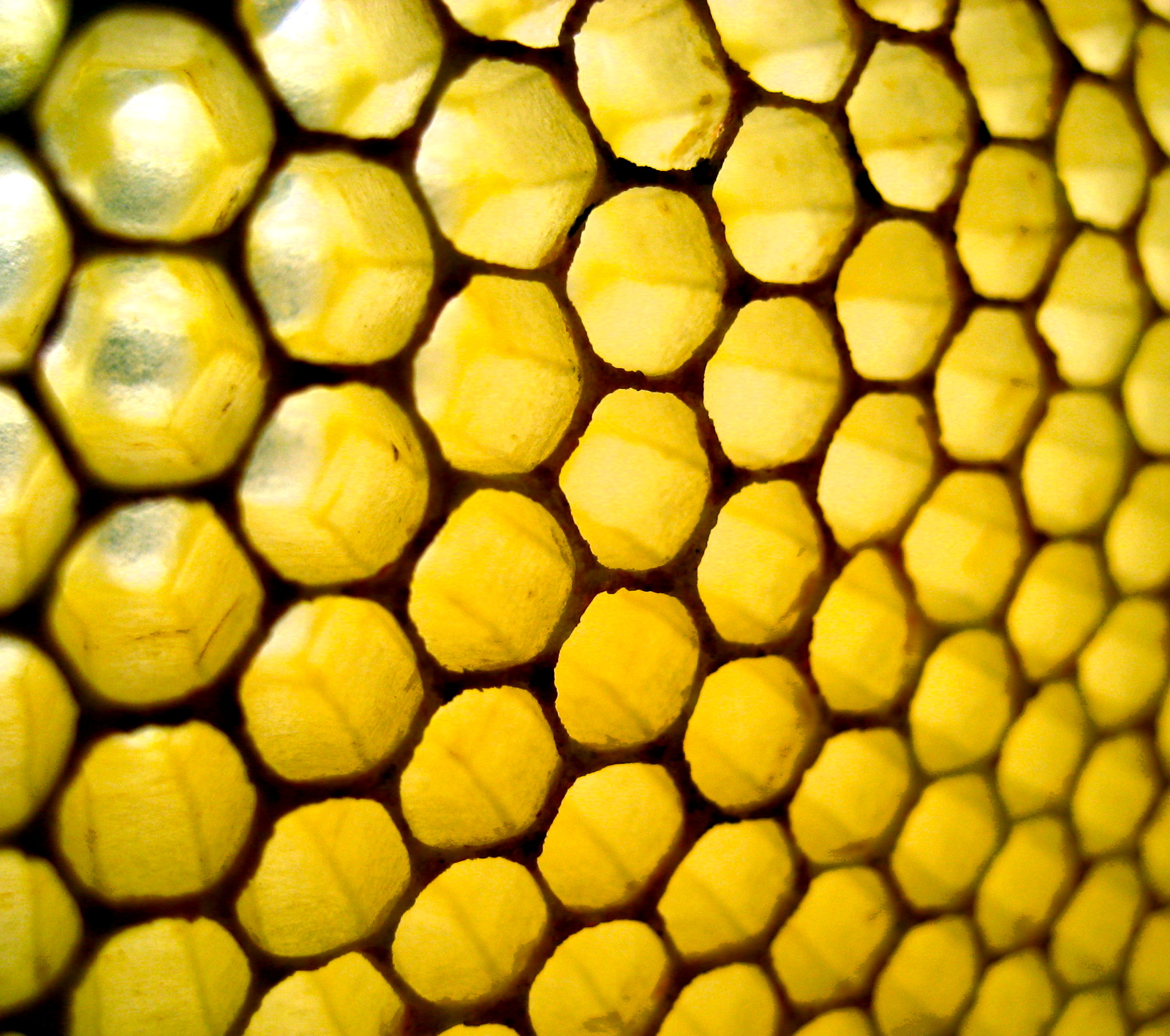
Honeycomb is one of the lightest, strongest, most efficient structures known. The comb isn’t just for honey, it’s the bee’s home: kitchen, nursery, pantry, bedroom and dance floor. Bees build these beautiful wax hexagons from flakes of wax (made in glands on their bellys) using their mouth and feet. Each identical cell tilts back at an angle of exactly 13˚ (so honey doesn’t flow out) and cells are joined at precisely 120˚. Bees use hexagons (not squares or triangles) because they use the least wax for the most space – hexagons are found elsewhere in nature where an efficient shape is needed.
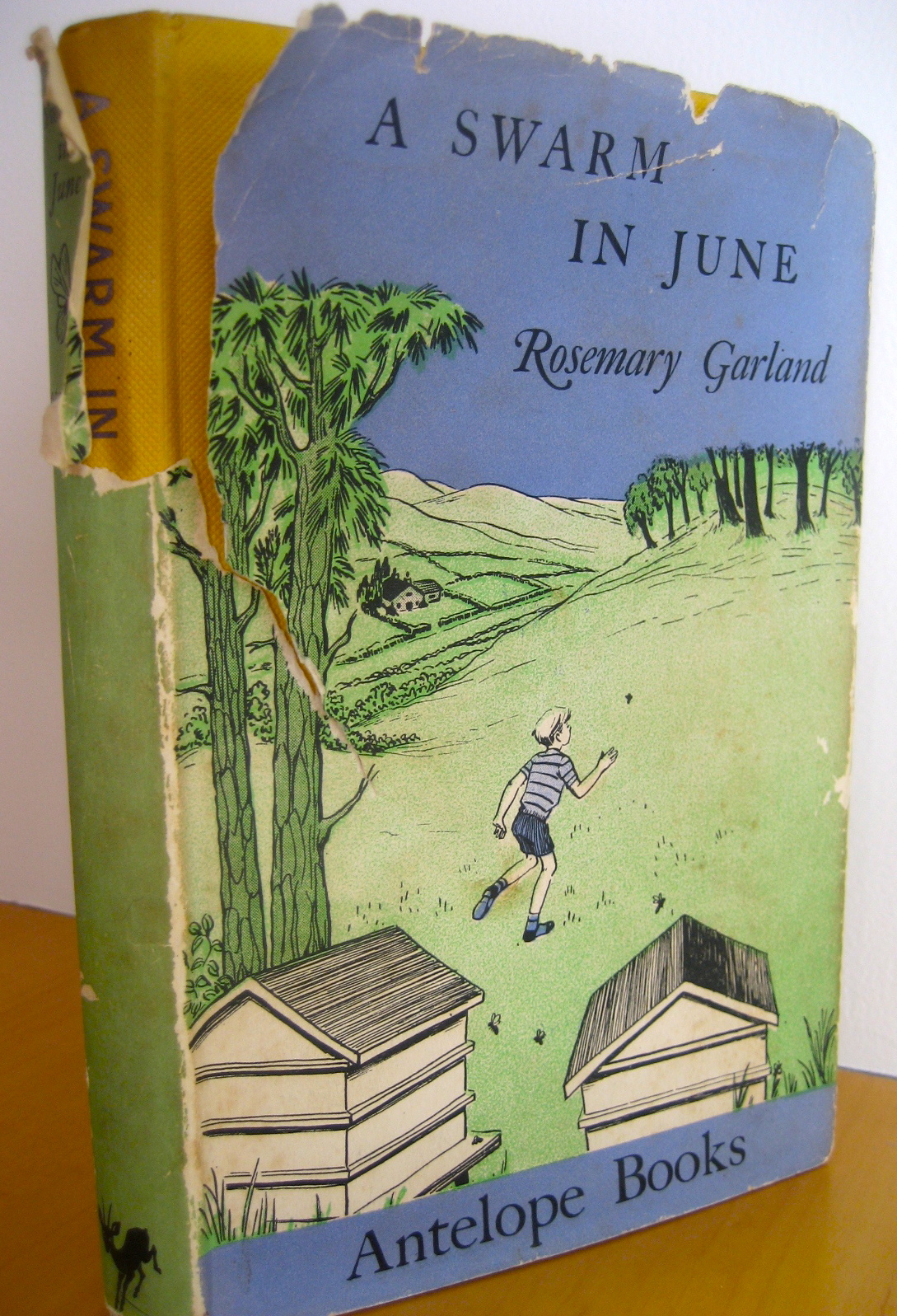
Children’s fiction about honey bees is rare and this gem from 1957 is hard to find. A Swarm in June by Rosemary Garland is a charming junior novel that beautifully combines bee lore with childhood wonder. Seven year old Jonathan finds a wild swarm in June (‘worth a silver spoon’) but a visiting cousin is scared of bees. It takes an attack by a stoat to unite the cousins in the end. It’s an innocent tale and the bee wisdom is timeless: beating a gong to attract a swarm; tracking bees with thistledown; and ‘telling the bees’ about important events in our lives. Best of all is the way the boy is so comfortable around the bees.
‘Neonicotinoids’ … a clunky word, but one that everybody should know. They (‘neonics’ for short) are the most widely used insecticides in the world – they’re now found in almost every managed landscape from farms to home gardens (and use is increasing rapidly). Neonics are non-targeted (ie.lazy) pest control: they’re usually coated on seeds and the poison stays in the plant as it grows. And the residue can remain in plant tissue, pollen, soil and water for years – it’s these residues that can kill beneficial wildlife: bees, birds, soil creatures and helper insects. That makes neonics a threat to our food supply because:
Bees and other pollinators directly provide much of our food
Soil creatures (worms, microbes) are vital for soil health
Helper insects (predatory and parasitic species) provide natural pest control
Why would we want to harm any of these? The EU has put a two year ban on neonics (because of damage to bees)but they are still used in NZ and are available to the public. Let’s ask garden and hardware shops to stop selling them (Placemakers and The Warehouse have recently withdrawn them) and the EPA to ban them.
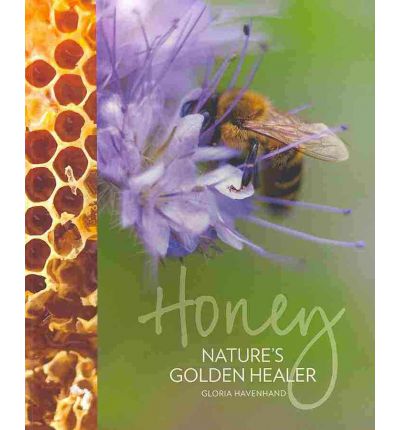
Honey, Nature’s Golden Healer by Gloria Havenhand is a superb book that deftly balances bee science, beekeeping expertise, folklore and health tips. Honey is more than just another spread for your toast:
‘Most people know very little about honey and its healing powers… Research has shown honey deserves to move into the serious league for healing.’
I thought I knew every fascinating fact about honey but I found many new insights here:
Beeswax is made by bees only 10 to 18 days old who consume about 10 kg of honey to make 1 kg of wax.
A little honey before bedtime fuels the brain overnight because the live stores the sugar (fructose).
Raw honey is best to eat. Most supermarket honey is treated which removes vitamins, anti-bacterials and pollen nutrients.
Always scrape out the honey jar – that last 1/10 of teaspoon represents the honey collected by one bee in her entire lifetime.
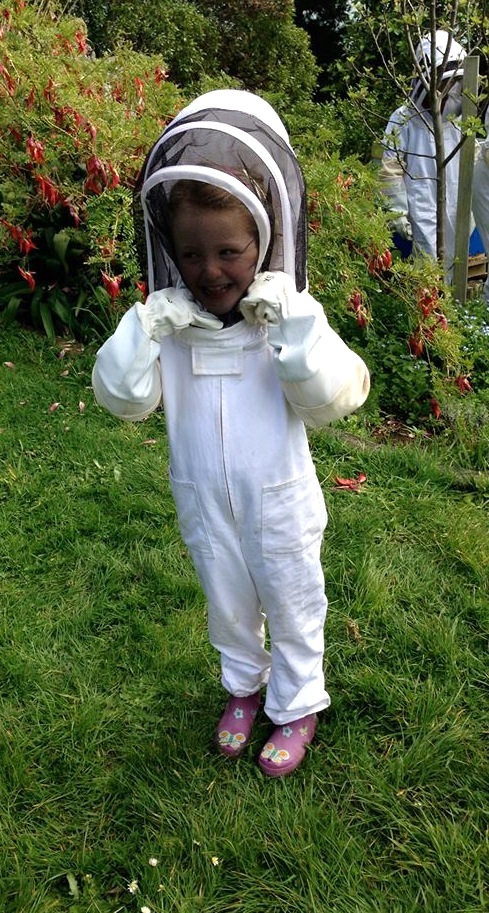
City life can distance people from nature and from the consequences of environmental damage. One solution is to bring nature to people’s door-steps, such as bringing beehives into the city. Murray and Heidi Rixon rent beehives into home gardens. They visit the hives regularly and teach their clients how to manage the bees and provide protective bee suits for the whole family. People can choose their degree of involvement with the hives and most are very keen to learn.
They say the Rentahive business has a ”massive feel-good factor” and people are driven by the urge to do something positive and proactive about the bee crisis. Customers are also excited to get a share of the honey. Murray and Heidi have just launched a schools’ project to teach children about bees. The children can partake in beehive construction, help with care of the hive and honey extraction.
There are many benefits having hives in an urban setting: bees get a longer flowering season and a wider variety of pollen/nectar sources; gardens are well-pollinated; honey flavours are unique; and best of all, people more fully engage with the environment.
A female bee lives for only about six weeks in summer. But it’s a life lived to the full because she’s constantly changing jobs: from cleaner to babysitter, builder, honey-chef, queen-groomer, guard, forager, undertaker and scout. Here is the diary of a teen bee:
Week 1 Dear Diary, So unfair! The work started the moment I hatched. I had to clean out my birth cell (ew!), then spend the whole week tidying the rest of the hive. My older sisters call me a ‘house bee’ and say I’m not allowed outside ‘til I’m 21 days. And I’m like, no way sister!
Week 2 Dear Diary, Yay! I’m a babysitter. The babies are sooo cute but totally exhausting. I have to check them 1300 times a day (okay, call me obsessive) to make sure they’re okay. Meanwhile the comb cleaning goes on 4EVAH…
Week 3 Dear Diary, I’ve graduated to building honeycomb, and I have to admit my hexagons are pretty groovy. I make honey in my so-called spare time – when I’m not still CLEANING!! Celebrated my 21st with my first flight and harvested nectar from flowers – it’s such a sweet job!
Tags: honey bees Posted in Bees | Comments Off on The Diary of a Teenage Bee
In the 1960s, Jane Goodall was criticised for saying chimpanzees have emotions. Today the evidence suggests she’s right although scientists remain wary of anthropomorphism – associating human traits with animals – often with good reason (eg. the gross inaccuracy of The Bee Movie in which boy bees did the work). Of course animals don’t see the world exactly we do, but we shouldn’t ignore what we have in common with them:
Anthropo-denial: A blindness to the humanlike characteristics of other animals, or the animal-like characteristics of ourselves. – F. de Waal
The weight of scientific evidence is that animal have thoughts, feelings and intelligence – animals are not mere ‘survival machines’. It’s now accepted that humans and animals share many traits (Marc Bekoff (The Emotional Lives of Animals); this fits nicely with evolution which teaches us animals are our relatives and all life is connected. Forgetting this relationship has led to the honey bee crisis, for example, as people have treated bees as tools rather than partners in pollination.
Acknowledged as individuals, those sparrows, salamanders and squirrels are not interchangeable parts of a species machine. They are beings with their own inner lives and experiences. – Brandon Keim (Animal Consciousness)
Using language that reflects our ‘common ground’ can help give children empathy with the natural world. When writing Flight of the Honey Bee I wanted accurate science yet also a sense of a bee’s experience. Should I use human concepts such as ‘know’, ‘remember’, captivate’, and ‘story’? Should I even call the bees ‘sisters’? The answer was yes. Honey bees have language, intelligence, and memory (and maybe something like emotions); and they’re more genetically sisters than humans.
They are not us, but to look into their eyes is to know that someone is in there. Imposing our own specific thoughts and feelings on that someone is in one sense too imaginative, in presuming he could receive the world in the way we do, and in another not imaginative enough, in not opening our minds to the full possibilities of his difference.- Caitrin Nicol (Do Elephants Have Souls?)